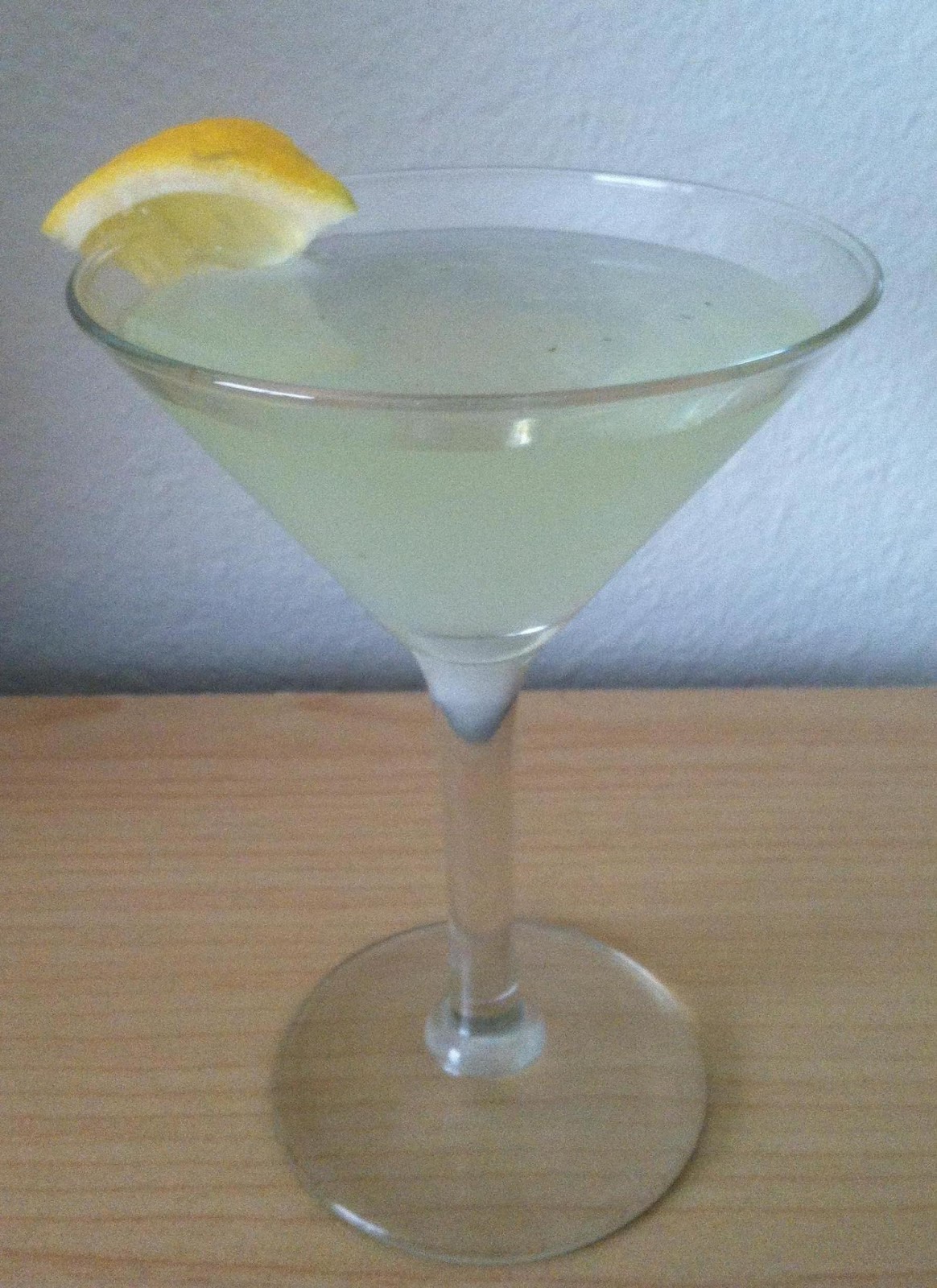
Mixology Monday was one of the exciting regular events that got me into creating this blog in the first place. In my opinion, its monthly themes have always been sharp enough to spur inspiration and creativity to share new ideas and spread already-established ones.
MxMo was created by our mixological forefather Paul Clarke, who passed the torch to the eminent Frederic Yarm who, if nothing else, is the most prolific cocktail blogger/author on the internet. Fred has decided to let MxMo die this organic death, for which he provides his own reasons.
Appropriately, the theme for this final event is in the spirit of an Irish Wake. I've navigated this broad theme by deciding to write about a time that alcohol has helped me mourn, at Fred's suggestion.
I want to firstly thank Paul and Fred for being stewards of this pillar of modern mixology's presence on the internet. Its existence was formative on the way I think about and make drinks, and has been from the beginning. (Let's just say that I wasn't even 21 years old when MxMo started.) As Fred details in the link above, maintaining MxMo was never easy, but his and Paul's work has not gone unappreciated over the years.
In the autumn of 2015 a cousin of mine came to our house with a family friend in order to catch up and have drinks and dinner. As my dear DJ HawaiianSkirt isn't a big drinker, I often relish the opportunity to use my considerable bar to entertain and, especially, to test new recipes.
My cousin had recently moved to the area and so I wasn't used to seeing her often. Shortly after our guests' arrival, a topic that quickly arose was the health of our grandmother, as she had been a victim of severe dementia for the last few years and seemed to have recently entered a final spiral.
Moments afterward, I received a text from my father letting me know that our grandmother had passed away minutes ago. We looked at each other for a moment in silence. As both of our phones began blowing up over the next few minutes, an ironic thought came to my mind: after living lifetimes apart from each other, our grandmother's only two grandchildren were together thinking about her and talking about her at the very moment of her passing.
After things calmed down, we all wondered if we should continue our evening as planned, or if we were even up for it. Brief deliberation concluded our grandmother would have wanted us to drink and be merry, and so that's what we did.
What were we drinking that night, you ask? I don't remember everything, but two things that I do were our "house drink" the Hwalisa, and some tonics mixed with my homemade gin.
Thanks again to Paul and Fred for this august tradition. May its spirit remain in its absence.
Sunday, February 19, 2017
Monday, November 21, 2016
Mixology Monday CXII: Bacon, Eggs, and Booze
Thanks to Gary of Doc Elliot's Mixology for hosting this month's Mixology Monday. The theme this time around is "brunch drinks", a group of
libations with which I have a bone to pick.
Brunch
drinks are plenty delicious, so what's the problem? They're not boozy
enough, that's what. I don't exactly need a Zombie at brunch, but
Mimosas don't quite do the trick. Maybe it's a curse being a
heavyweight at brunch.
A "guilty pleasure" of
mine as of recent is gin & Champagne. Try it next time you're at an
open bar. There's something about it that is similar to a gin &
tonic. Can you see where I'm going with this?
This
recipe took a lot of tinkering to get the proportions right, but I
think I've done it. If you have a bottle of the cheap sparkling stuff
stashed away somewhere, pop it and give me your thoughts!
Breakfast & Tonic
2 oz sparkling white wine
1.5 oz London dry gin
1.5 oz tonic water
Build in a collins glass, then add ice and citrus peel until it's full.
Sunday, March 27, 2016
Review: Wicked Dolphin Silver Rum
As a spirit industry, rum has become more and more prolific over the last 10 years or so. I recently tasted a new rum on the market that was made from white granulated sugar; distillers are quickly learning that you don't need to own a sugar cane field in the Caribbean in order to produce rum. And yet, many rum producers outside of the Caribbean still import molasses from the islands. Others purchase molasses from local cane producers.
Enter Wicked Dolphin, a rum distillery that's only a few years old, located in Florida. Wicked Dolphin's rums are pot-distilled from the juice of cane cut from fields that are only minutes away from the distillery. This marks one of the few American rum productions which sources fermentation material locally, in the tradition of more staid American spirit industries like whiskey and apple brandy. The result is the beginning of an aspect to Wicked Dolphin's products that I wouldn't hesitate to call terroir. The bottle that I have (batch #13!) was sent to me as a gift for review.
Nose
Despite the fact that Wicked Dolphin is distilled from cane juice, you wouldn't be able to tell by the nose. The first few wafts have a sweetness and buttery-ness that will belie a molasses rum. Along with butter, there's vanilla, light brown sugar, and gentle wood. There's a freshness that I can only describe as running water. A big whiff ends with a slight alcoholic spark that's pleasantly subdued.
Taste
The butter continues on the tongue. The traditional white rum vanilla notes manifest here as butter and butterscotch. The mouth feel has a noticeable viscosity. Its sweet state on the tongue will once again make you think this is not cane rum. It's at this time that the alcohol will remind you it's there on your tongue and the roof of your mouth. The finish has a freshness that's reminiscent of the chlorophyll of crisp lettuce. Perhaps that's the sugar cane's grassiness trying to come through?
Mixing
I find that because rums can vary so widely, so can their mixability. The bottom of the scale grinds from the drown-it-in-cola stuff all the way up to the don't-you-dare-mix-that nectar of the gods. My take is that Wicked Dolphin white falls somewhere between fruity drinks and drunk straight. It plays perfectly in a Daiquiri or a subtle mixer like soda or ginger ale.
Conclusion
I've drunk too many shitty American rums. The fact that Wicked Dolphin is imminently drinkable combined with its honest American end-to-end production make it quite noteworthy. Some price checks will have you learn that Wicked Dolphin white will cost between $20-25. Are there better rums for cheaper? Absolutely. But buying Wicked Dolphin will yield a great drink as well as pay American workers, all the while helping develop the southern Florida rum terroir. I look forward to seeing how the Wicked Dolphin distillery and rums mature going forward.
Enter Wicked Dolphin, a rum distillery that's only a few years old, located in Florida. Wicked Dolphin's rums are pot-distilled from the juice of cane cut from fields that are only minutes away from the distillery. This marks one of the few American rum productions which sources fermentation material locally, in the tradition of more staid American spirit industries like whiskey and apple brandy. The result is the beginning of an aspect to Wicked Dolphin's products that I wouldn't hesitate to call terroir. The bottle that I have (batch #13!) was sent to me as a gift for review.
Nose
Despite the fact that Wicked Dolphin is distilled from cane juice, you wouldn't be able to tell by the nose. The first few wafts have a sweetness and buttery-ness that will belie a molasses rum. Along with butter, there's vanilla, light brown sugar, and gentle wood. There's a freshness that I can only describe as running water. A big whiff ends with a slight alcoholic spark that's pleasantly subdued.
Taste
The butter continues on the tongue. The traditional white rum vanilla notes manifest here as butter and butterscotch. The mouth feel has a noticeable viscosity. Its sweet state on the tongue will once again make you think this is not cane rum. It's at this time that the alcohol will remind you it's there on your tongue and the roof of your mouth. The finish has a freshness that's reminiscent of the chlorophyll of crisp lettuce. Perhaps that's the sugar cane's grassiness trying to come through?
Mixing
I find that because rums can vary so widely, so can their mixability. The bottom of the scale grinds from the drown-it-in-cola stuff all the way up to the don't-you-dare-mix-that nectar of the gods. My take is that Wicked Dolphin white falls somewhere between fruity drinks and drunk straight. It plays perfectly in a Daiquiri or a subtle mixer like soda or ginger ale.
Conclusion
I've drunk too many shitty American rums. The fact that Wicked Dolphin is imminently drinkable combined with its honest American end-to-end production make it quite noteworthy. Some price checks will have you learn that Wicked Dolphin white will cost between $20-25. Are there better rums for cheaper? Absolutely. But buying Wicked Dolphin will yield a great drink as well as pay American workers, all the while helping develop the southern Florida rum terroir. I look forward to seeing how the Wicked Dolphin distillery and rums mature going forward.
Wednesday, March 16, 2016
MxMo 107: The Best Amaretto Sour in the World
A big round of thanks to Dagreb for once again hosting this month's Mixology Monday! And this time he has a clever theme, and an even cleverer title!
Overproof spirits is really a theme I can get behind; I've been known to have a few bottles of such things lying around. And what's more, Dagreb has firmly defined his theme of "overproof" to be at least over 100 proof, so we're not going to be seeing any sissies thinking they're hot with their whiskies bottled in bond.
I'm going to keep up the "shitty drink" theme that I've got going and post another. This time it comes from one of our booze blogging forefathers Jeffrey Morgenthaler. He claims that he makes the best Amaretto Sour in the world, and his secret is cask strength bourbon. How could he not have your attention?
The result is delicious. The bourbon acts as a force multiplier and isn't even noticeable in the final result. Check it out.
Morgenthaler's Amaretto Sour
1.5 oz amaretto
.75 oz cask strength bourbon
1 oz lemon juice
1 tsp rich simple syrup*
1/2 oz egg white
Dry shake, then shake with ice. Double strain into an old fashioned glass filled with ice. Garnish with lemon peel and cocktail cherry.
*Cheap amaretti are usually sweeter than the expensive stuff. You may not need need to add the syrup when you make the drink.
Labels:
bourbon,
cocktail,
liqueur,
mixology monday,
recipes
Monday, February 29, 2016
Bahama Mama
When I was a wee lad wearing a much smaller
Hawaiian shirt, my family took a vacation to the Bahamas. One of the
most memorable moments from the trip was my being heartbroken over
Customs telling me that I couldn't bring a coconut on the airplane
home. Oh well.
One of the other things I remember from the
trip was that my parents sucked down Bahama Mamas the whole time. They
even gave me a sip on a few nights. Do I remember the finer tasting
notes of the stuff? No. But what I do remember is that I tasted
coconut and banana, and that its color was a jewel-like dark red.Further, Doug has parroted(see what I did there?) the idea that drinks can also be Tiki Compliant, lifting the central pole of the tiki tent higher to encompass more of what might be discussed as "tiki".
The DJ's Bahama Mama
2 oz Jamaican dark rum (Myers or Coruba)
1 oz orange juice
1 oz pineapple juice
.5 oz coconut rum
.5 oz creme de banane
.5 oz grenadine
Shake with ice and strain into a double old fashioned glass filled with crushed ice.
Thursday, February 18, 2016
Simple Zombie Cocktail
Happy Tiki Month 2016!
One of the most iconic tiki drinks of all time is the Zombie cocktail by Don the Beachcomber. Aside from the fact that the drink itself evolved bit by bit during the 20th Century, the notorious secrecy with which the Beachcomber and his competitors operated their bar programs way back when has resulted in a multitude of recipes for the Zombie. As far as I can tell, the only things that they all have in common are: rum, and being high proof. Most have grapefruit juice, but not all.
For a few years now I've had one such recipe scrawled on the inside of the back cover of my Grog Log. I swear that I wrote it down when I saw Beachbum Berry post it years ago, but now I can't find any trace of it on the internet except here. I know I didn't dream it up. Can anyone source it?
The recipe is a simplified Zombie, whatever that might mean. It ignores some of the more nuanced and exotic ingredients and instead sticks to a "skeleton crew" of more commons ones, while still claiming to capture the flavor of the 1934 original. True or not... Zombie or not... this is a delicious drink, and it's easy to make. It's my go-to recipe (along with the Reverb Crash) for impressing guests wanting a tiki drink who can handle something bitter and/or complex.
Simple Zombie
1 oz dark Jamaican rum
.5 oz 151-proof rum (any type)
1 oz grapefruit juice
.75 oz lime juice
.5 oz cinnamon syrup
Shake with ice cubes, strain into glass with more ice cubes.
One of the most iconic tiki drinks of all time is the Zombie cocktail by Don the Beachcomber. Aside from the fact that the drink itself evolved bit by bit during the 20th Century, the notorious secrecy with which the Beachcomber and his competitors operated their bar programs way back when has resulted in a multitude of recipes for the Zombie. As far as I can tell, the only things that they all have in common are: rum, and being high proof. Most have grapefruit juice, but not all.
For a few years now I've had one such recipe scrawled on the inside of the back cover of my Grog Log. I swear that I wrote it down when I saw Beachbum Berry post it years ago, but now I can't find any trace of it on the internet except here. I know I didn't dream it up. Can anyone source it?
The recipe is a simplified Zombie, whatever that might mean. It ignores some of the more nuanced and exotic ingredients and instead sticks to a "skeleton crew" of more commons ones, while still claiming to capture the flavor of the 1934 original. True or not... Zombie or not... this is a delicious drink, and it's easy to make. It's my go-to recipe (along with the Reverb Crash) for impressing guests wanting a tiki drink who can handle something bitter and/or complex.
Simple Zombie
1 oz dark Jamaican rum
.5 oz 151-proof rum (any type)
1 oz grapefruit juice
.75 oz lime juice
.5 oz cinnamon syrup
Shake with ice cubes, strain into glass with more ice cubes.
Thursday, September 24, 2015
Mixology Monday Orange Juice Roundup
If trying to mix booze with orange juice is a battle, then the legions of Mixology Monday just laid a merciless siege on the House of Citrus. Peels and pulp everywhere. I'd have it no other way for a ReMixMo.
I'm thoroughly pleased by both the success and the effort resulting from this endeavor. Huzzah to everyone. And now to the booze.
Pete of the Meticulous Mixing blog clearly speaks my mixological language, though our mother tongues may be different. Though wont to mix his OJ with rum, he resists this time and gives us two original remixes that I'll be needing to mix up posthaste. As if playing to my style, Pete chooses a few other less-used elements, like honey whiskey, Southern Comfort, and chocolate vodka, ingredients which I've enjoyed mixing myself. I'll let his rumless post slide, as the rest of it seethes with creativity and pluck.
Thankfully, the siren call of tiki did not go unheeded for this challenge, and our MxMo patron-saint Fred of the CocktailVirgin Slut is the first to post a remix of old that is simple, but meticulously constructed for balance. Exactly what the doctor ordered.
Beca of the Drink Shrubs blog wrests my ReMixMo theme and forces it to conform with her own, something which I welcome. In a decidedly tiki-style move, she deliberately chooses her rum by Caribbean island, specifically for its unique character. She also tops the mix with a bit of sparkling wine, a technique of which I'm a huge fan, and will be writing about soon.
Andrea of the Gin Hound pipes in and informs me of a method I never knew about: using Trader Vic's Eastern Sour as a template, using various base spirits as you fancy. She whips out her joven mezcal for a truly interesting remix!
For Doc Elliot's Mixology, the Doc holds fast to a fairly tiki theme throughout. He comes at us with an eyebrow-raising mix of OJ and bourbon, a dessert drink with coffee foam(!), and a tiki standard that I hadn't yet heard of before.
My boy Dagreb claims to recycle more rum bottles than anything else after I remarked my most recycled is gin. He proves it by posting a rum & OJ drink that I like for several reasons, the first being that it's forgiving with the type of rum and juice used, and second being that it's just fine built and stirred, for when you're too lazy to shake or if (like me) you don't want more dishes to clean.
Leigh of Salt and Bitters goes after my heart by saying first "I had never thought about the fact that orange juice was so rare in cocktails.", and then, "It's because it's really fucking hard to work with." Eloquent and blunt! Her answer is an original remix named like an academic paper and, since I too want to put canned chipotle adobo sauce in everything, the drink sits just fine with me!
Joel of the Southern Ash blog stumbles upon how well OJ and tequila mix together... something I've been wanting to experiment with for quite a while now. And as a resident of the Washington, DC area and a political junkie, how can I not love another drink named after taxes?!
Scott of Shake, Strain, and Sip takes a remix of old and updates it in a breathtaking way. This is the perfect example of to use new and revived ingredients to make a tired potable notable again. No, no, no... touché to you, Mr. Scott!
Christa and Shaun, the Booze Nerds choose this month to sing praises to an aforementioned concoction from Trader Vic, the Eastern Sour. It doesn't get much better than this: a tiki drink that shirks rum and gives you a lesson in sweet-sour balance. Maybe this MxMo 101 is about lessons in booze after all!!!
JFL of Rated R Cocktails benefits from the OJ's vitamin C as he mixes some diddies and fights off the flu. I myself like alcohol's numbing effects while sick, but you need to be careful! JFL pairs the unlikely duo of Demerara and white Haitian rum(which I've never even had) with some heavy spiced and herbal ingredients for a juggernaut that must taste complex as hell. I'm totally jelly!
Thanks to everyone who participated, you didn't let me or OJ down. Viva Mixology Monday, as always!
I'm thoroughly pleased by both the success and the effort resulting from this endeavor. Huzzah to everyone. And now to the booze.
Pete of the Meticulous Mixing blog clearly speaks my mixological language, though our mother tongues may be different. Though wont to mix his OJ with rum, he resists this time and gives us two original remixes that I'll be needing to mix up posthaste. As if playing to my style, Pete chooses a few other less-used elements, like honey whiskey, Southern Comfort, and chocolate vodka, ingredients which I've enjoyed mixing myself. I'll let his rumless post slide, as the rest of it seethes with creativity and pluck.
Thankfully, the siren call of tiki did not go unheeded for this challenge, and our MxMo patron-saint Fred of the Cocktail
Beca of the Drink Shrubs blog wrests my ReMixMo theme and forces it to conform with her own, something which I welcome. In a decidedly tiki-style move, she deliberately chooses her rum by Caribbean island, specifically for its unique character. She also tops the mix with a bit of sparkling wine, a technique of which I'm a huge fan, and will be writing about soon.
Andrea of the Gin Hound pipes in and informs me of a method I never knew about: using Trader Vic's Eastern Sour as a template, using various base spirits as you fancy. She whips out her joven mezcal for a truly interesting remix!
For Doc Elliot's Mixology, the Doc holds fast to a fairly tiki theme throughout. He comes at us with an eyebrow-raising mix of OJ and bourbon, a dessert drink with coffee foam(!), and a tiki standard that I hadn't yet heard of before.
My boy Dagreb claims to recycle more rum bottles than anything else after I remarked my most recycled is gin. He proves it by posting a rum & OJ drink that I like for several reasons, the first being that it's forgiving with the type of rum and juice used, and second being that it's just fine built and stirred, for when you're too lazy to shake or if (like me) you don't want more dishes to clean.
Leigh of Salt and Bitters goes after my heart by saying first "I had never thought about the fact that orange juice was so rare in cocktails.", and then, "It's because it's really fucking hard to work with." Eloquent and blunt! Her answer is an original remix named like an academic paper and, since I too want to put canned chipotle adobo sauce in everything, the drink sits just fine with me!
Joel of the Southern Ash blog stumbles upon how well OJ and tequila mix together... something I've been wanting to experiment with for quite a while now. And as a resident of the Washington, DC area and a political junkie, how can I not love another drink named after taxes?!
Scott of Shake, Strain, and Sip takes a remix of old and updates it in a breathtaking way. This is the perfect example of to use new and revived ingredients to make a tired potable notable again. No, no, no... touché to you, Mr. Scott!
Christa and Shaun, the Booze Nerds choose this month to sing praises to an aforementioned concoction from Trader Vic, the Eastern Sour. It doesn't get much better than this: a tiki drink that shirks rum and gives you a lesson in sweet-sour balance. Maybe this MxMo 101 is about lessons in booze after all!!!
JFL of Rated R Cocktails benefits from the OJ's vitamin C as he mixes some diddies and fights off the flu. I myself like alcohol's numbing effects while sick, but you need to be careful! JFL pairs the unlikely duo of Demerara and white Haitian rum(which I've never even had) with some heavy spiced and herbal ingredients for a juggernaut that must taste complex as hell. I'm totally jelly!
Thanks to everyone who participated, you didn't let me or OJ down. Viva Mixology Monday, as always!
Tuesday, September 15, 2015
Four Things I Learned Trying to Make My Own Gin
I spent this summer drinking gin.
I always say that rum is my favorite spirit, but I find myself recycling more gin bottles than anything else. Whether this is because I'm unknowingly a gin fanatic or that gin cocktails are historically more prevalent than those of other spirits, I don't know.
As my palate explored the different styles and brands of gin and their subtle yet complex differences, I found my mind attempting to explore what other flavors could be added to a gin's recipe of botanicals and might still have success.
Wanting to experiment with this, instead of deciding to infuse upon some simple gin brand as a base, I flippantly decided that I would infuse my own gin, which I've seen done on the interwebs. How hard could it be? It turned out to be the hardest booze endeavor I've undertaken. I haven't even dabbled with new flavors yet; I've spent all this time on getting a baseline gin.
Gin, of course, is most basically flavored vodka, in the sense that the base spirit can be of any fermented source, so long as it's distilled enough times to retain little flavor. Proper gin, however, involves the infusion of herbs and spices either during distillation or before a final post-infusion distillation.
And so, half-assed gin can be made via infusion only. I'm not one to half-ass things, but I am when it comes to not wanting to distill in my own house. I realized that whatever gin I would be able to infuse would be not very similar to the real stuff, but I was hoping that I could get it "in the ballpark". I bought a sensitive digital scale and everything!
After several months, I'm satisfied with my mix, though I still plan to improve it. Here's what I've learned.
For infusing, there's juniper, and then there's juniper
Of course, juniper is the main flavorant in a gin's recipe across almost all the gin styles. Dried juniper berries are easy to find. I have a feeling that fresh berries would better, but I haven't sought to find them, as I imagine it would be difficult.
What surprised me is how different the resulting infusion is depending on whether you crush the berries or leave them whole and intact. After weeks of confusing results, I realized that I obtained more of the traditional juniper flavor in my gin by leaving the berries whole instead of breaking their skin/shell by crushing. So does this mean that main ingredient in most gin is actually juniper skin? I still have no idea!
That traditional juniper hit is hard to achieve
As mentioned above, I didn't initially realize that juniper skin was important for the juniper flavor I was seeking (at least, in my trials). However, I still haven't managed to achieve a central juniper note reminiscent of commercial gins. I'm beginning to wonder if distillation is required for it. Too much crushed juniper yields a bitter flavor that overtakes everything else, and too much whole juniper yields (surprisingly) a sweetness that doesn't jive with the rest of the flavors. So for now I must settle with an amount of juniper that leaves that distinct flavor underwhelming in magnitude.
Humorously, my solution (for now) is to simulate the coniferous flavor using non-juniper means. After infusing spruce needles with little success, I found a better alternative: pine needles! I ordered food-grade pine needles online, and they play a role in my current recipe (alongside the juniper). It's not quite the same as what I wanted, but it's good.
Angelica root makes a big difference
I'm not saying that angelica is needed in gin, because there are many commercial gins that do not use it. But for me, angelica adds something that my recipe needed. Its flavor (when infused) is astringent and bright; it adds a sourness that reminds me of wormwood (minus the bitterness) and a pungent acidity that is not unlike juniper, but perhaps more herbal and grassy. I expected this root, by its looks, to be heavy and woody. It turned out to be the opposite. This makes me want to try to infuse orris root, which is also sometimes used in gin.
Infusion ratio/time is your flexible friend, but also your enemy
Think about all the different ways you could infuse an ingredient into vodka. Obviously its strength would be dependent on how long the ingredient is soaked. But, infusing an ingredient for, say, 2 hours is not the same as doubling the amount of ingredient for a 1-hour infusion, or halving it for a 4-hour infusion. What about heating the vodka and then infusing? What about infusing the vodka in the freezer?
Different flavor compounds within the same ingredient infuse at different rates and at different temperatures. Have you heard of the recent craze in cold-brew coffee? Cold-brew coffee tastes different than iced coffee. Different flavor compounds brew out of the coffee grounds during a long, cold infusion as opposed to a short, hot one.
We haven't even talked about the difference between infusing ingredients whole, cracked, chopped, or ground. Surface area matters. And as with ingredients like the juniper above, since the skin and interior impart different flavors, the difference between infusing it whole and cracked, or cracked and crushed, can vastly change your results.
This freedom and flexibility soon becomes your enemy because of the vast variability that will always have you in trial and error. Should your infusion take an hour or a week? The ingredients being whole or ground to a powder/paste? Which flavors will be compromised by either of these pairs of choices? How much time and money are you willing to spend on perfecting this balance?
My recipe was designed minimize the amount of time and money it took to experiment. I infused 8oz of vodka at a time(plus a little more), and I decided to have my infusion last 24 hours. This allowed me to not go broke, and to make a different infusion every single day, if I so chose.
Here's what I have so far. But as I said above, this endeavor, to its detriment, is a work in progress.
The DJ's Infused Gin (Homemade Mix)
8oz vodka
4oz vodka
1.5g juniper berries, whole
.75g lemon peel, sliced finely
.75g orange peel, slices finely
.5g pine needles, muddled
.5g canela cinnamon, torn
.4g juniper berries, crushed
.3g angelica root, cracked/crushed
cardamom*
Soak all ingredients in vodka for 24 hours, shaking vessel when able. Strain, and dilute with 4oz more vodka.
* Cardamom is a tough customer. It's in many gin recipes, but it's flavor is so strong that it's hard to wield. I've experimented with whole and ground cardamom, and I still haven't yet found my perfect amount. Err on the side of too little.
I always say that rum is my favorite spirit, but I find myself recycling more gin bottles than anything else. Whether this is because I'm unknowingly a gin fanatic or that gin cocktails are historically more prevalent than those of other spirits, I don't know.
As my palate explored the different styles and brands of gin and their subtle yet complex differences, I found my mind attempting to explore what other flavors could be added to a gin's recipe of botanicals and might still have success.
Wanting to experiment with this, instead of deciding to infuse upon some simple gin brand as a base, I flippantly decided that I would infuse my own gin, which I've seen done on the interwebs. How hard could it be? It turned out to be the hardest booze endeavor I've undertaken. I haven't even dabbled with new flavors yet; I've spent all this time on getting a baseline gin.
Gin, of course, is most basically flavored vodka, in the sense that the base spirit can be of any fermented source, so long as it's distilled enough times to retain little flavor. Proper gin, however, involves the infusion of herbs and spices either during distillation or before a final post-infusion distillation.
And so, half-assed gin can be made via infusion only. I'm not one to half-ass things, but I am when it comes to not wanting to distill in my own house. I realized that whatever gin I would be able to infuse would be not very similar to the real stuff, but I was hoping that I could get it "in the ballpark". I bought a sensitive digital scale and everything!
After several months, I'm satisfied with my mix, though I still plan to improve it. Here's what I've learned.
For infusing, there's juniper, and then there's juniper
Of course, juniper is the main flavorant in a gin's recipe across almost all the gin styles. Dried juniper berries are easy to find. I have a feeling that fresh berries would better, but I haven't sought to find them, as I imagine it would be difficult.
What surprised me is how different the resulting infusion is depending on whether you crush the berries or leave them whole and intact. After weeks of confusing results, I realized that I obtained more of the traditional juniper flavor in my gin by leaving the berries whole instead of breaking their skin/shell by crushing. So does this mean that main ingredient in most gin is actually juniper skin? I still have no idea!
That traditional juniper hit is hard to achieve
As mentioned above, I didn't initially realize that juniper skin was important for the juniper flavor I was seeking (at least, in my trials). However, I still haven't managed to achieve a central juniper note reminiscent of commercial gins. I'm beginning to wonder if distillation is required for it. Too much crushed juniper yields a bitter flavor that overtakes everything else, and too much whole juniper yields (surprisingly) a sweetness that doesn't jive with the rest of the flavors. So for now I must settle with an amount of juniper that leaves that distinct flavor underwhelming in magnitude.
Humorously, my solution (for now) is to simulate the coniferous flavor using non-juniper means. After infusing spruce needles with little success, I found a better alternative: pine needles! I ordered food-grade pine needles online, and they play a role in my current recipe (alongside the juniper). It's not quite the same as what I wanted, but it's good.
Angelica root makes a big difference
I'm not saying that angelica is needed in gin, because there are many commercial gins that do not use it. But for me, angelica adds something that my recipe needed. Its flavor (when infused) is astringent and bright; it adds a sourness that reminds me of wormwood (minus the bitterness) and a pungent acidity that is not unlike juniper, but perhaps more herbal and grassy. I expected this root, by its looks, to be heavy and woody. It turned out to be the opposite. This makes me want to try to infuse orris root, which is also sometimes used in gin.
Infusion ratio/time is your flexible friend, but also your enemy
Think about all the different ways you could infuse an ingredient into vodka. Obviously its strength would be dependent on how long the ingredient is soaked. But, infusing an ingredient for, say, 2 hours is not the same as doubling the amount of ingredient for a 1-hour infusion, or halving it for a 4-hour infusion. What about heating the vodka and then infusing? What about infusing the vodka in the freezer?
Different flavor compounds within the same ingredient infuse at different rates and at different temperatures. Have you heard of the recent craze in cold-brew coffee? Cold-brew coffee tastes different than iced coffee. Different flavor compounds brew out of the coffee grounds during a long, cold infusion as opposed to a short, hot one.
This freedom and flexibility soon becomes your enemy because of the vast variability that will always have you in trial and error. Should your infusion take an hour or a week? The ingredients being whole or ground to a powder/paste? Which flavors will be compromised by either of these pairs of choices? How much time and money are you willing to spend on perfecting this balance?
My recipe was designed minimize the amount of time and money it took to experiment. I infused 8oz of vodka at a time(plus a little more), and I decided to have my infusion last 24 hours. This allowed me to not go broke, and to make a different infusion every single day, if I so chose.
Here's what I have so far. But as I said above, this endeavor, to its detriment, is a work in progress.
The DJ's Infused Gin (Homemade Mix)
8oz vodka
4oz vodka
1.5g juniper berries, whole
.75g lemon peel, sliced finely
.75g orange peel, slices finely
.5g pine needles, muddled
.5g canela cinnamon, torn
.4g juniper berries, crushed
.3g angelica root, cracked/crushed
cardamom*
Soak all ingredients in vodka for 24 hours, shaking vessel when able. Strain, and dilute with 4oz more vodka.
* Cardamom is a tough customer. It's in many gin recipes, but it's flavor is so strong that it's hard to wield. I've experimented with whole and ground cardamom, and I still haven't yet found my perfect amount. Err on the side of too little.
Sunday, September 6, 2015
Mixology Monday CI: Orange Juice
Mixology Monday 100 was an affair as grand as it was modest, its theme of "elegance via simplicity" being a perfect milestone for this monthly cocktail party that has grown in size and scope over the last few years. As MxMo themes have gotten broader and quirkier over time, this 100th such occasion slowed us down... made us think... returned to fundamentals. And now with the MxMo pallet cleansed, head cleared, and the throttle reset for a nice cruising speed, it's time for me to do what I often do and throw out a speed bump idea to disorient, bemuse, and perhaps even annoy.
Welcome to Spirited Remix where I, your DJ who usually spins mixes around here, will be asking you to do it instead for Mixology Monday One Hundred One, or as I might affectionately call it, ReMixMo.
It really irritates me when people dismiss an ingredient. Whether it's too ordinary, or difficult, or inconsistent, or overpowering, I can't help but feel such conclusions are lazy and defeatist. Your theme this month is "Orange Juice", an ingredient I too often see derided or ignored when it comes to thoughtful mixology. Surely an assembly of such mixological brawn as MxMo can find or create a delicious way to mix OJ, right? And before you think this challenge isn't challenging, regard my rules:
1) Whether it's established or your own creation, write about a cocktail that uses orange juice. Not orange liqueur, or oil, or bitters, or tangerine juice. Orange juice.
2) Your orange juice can be fresh squeezed, from concentrate, or from a bottle, carton, or can.
3) Your orange juice cannot be buried in the cocktail; it must play at least a noticeably supporting role in the drink.
4) If you must choose one of the simple, already-establish orange juice cocktails (you know the ones), then at least write something thoughtful enough to make me want to mix one up.
Submitting is easy. If you have a website, feel free to link your post in the comment section of this post. Otherwise, you may also email it to me at djhawaiianshirt at gmail.com. Either of these avenues must be taken by 11:59 PM of Monday, September 21, 2015. Shortly thereafter I will compile the submissions into the ReMixMo Roundup.
It must be noted that back when this little site was only but a thought, our MxMo forefathers were spinning their own remixes on MxMo XVIII, with "orange" simply as the theme. The event was hosted by Gwen of the now-passed Intoxicated Zodiac blog. A blurb from that era: "Juice? Triple Sec? Curacao? I’m sure some wag will go for orange bitters — hell, if you can use an orange twist and make it interesting, then you’ve got no reason not to join in." Respect, Gwen, but nah, that's way too easy. My last ReMixMo was for freeing and open themes; this time it's business.
Thanks again to Fred for hosting the fabulous MxMo 100.
Welcome to Spirited Remix where I, your DJ who usually spins mixes around here, will be asking you to do it instead for Mixology Monday One Hundred One, or as I might affectionately call it, ReMixMo.
It really irritates me when people dismiss an ingredient. Whether it's too ordinary, or difficult, or inconsistent, or overpowering, I can't help but feel such conclusions are lazy and defeatist. Your theme this month is "Orange Juice", an ingredient I too often see derided or ignored when it comes to thoughtful mixology. Surely an assembly of such mixological brawn as MxMo can find or create a delicious way to mix OJ, right? And before you think this challenge isn't challenging, regard my rules:
1) Whether it's established or your own creation, write about a cocktail that uses orange juice. Not orange liqueur, or oil, or bitters, or tangerine juice. Orange juice.
2) Your orange juice can be fresh squeezed, from concentrate, or from a bottle, carton, or can.
3) Your orange juice cannot be buried in the cocktail; it must play at least a noticeably supporting role in the drink.
4) If you must choose one of the simple, already-establish orange juice cocktails (you know the ones), then at least write something thoughtful enough to make me want to mix one up.
Submitting is easy. If you have a website, feel free to link your post in the comment section of this post. Otherwise, you may also email it to me at djhawaiianshirt at gmail.com. Either of these avenues must be taken by 11:59 PM of Monday, September 21, 2015. Shortly thereafter I will compile the submissions into the ReMixMo Roundup.
It must be noted that back when this little site was only but a thought, our MxMo forefathers were spinning their own remixes on MxMo XVIII, with "orange" simply as the theme. The event was hosted by Gwen of the now-passed Intoxicated Zodiac blog. A blurb from that era: "Juice? Triple Sec? Curacao? I’m sure some wag will go for orange bitters — hell, if you can use an orange twist and make it interesting, then you’ve got no reason not to join in." Respect, Gwen, but nah, that's way too easy. My last ReMixMo was for freeing and open themes; this time it's business.
Thanks again to Fred for hosting the fabulous MxMo 100.
Monday, August 24, 2015
MxMo C: An Entreaty
I am one of those
mentioned by Fred who trembled in the face of possibly hosting Mixology Monday #100. Luckily, I narrowly missed that mandate to act so seriously, thank god, and will instead be hosting next month's
event. But for this occasion, I can't think of a better host or theme
to celebrate Mixology Monday.
EDIT: You can find the MxMo C Roundup here: http://cocktailvirgin.blogspot.com/2015/08/mxmo-cocktail-chronicles-wrap-up.html
MxMo patron-saint Frederic Yarm is thankfully hosting this 100th such event. The theme he's chosen is "Cocktail Chronicles", the eminent booze blog of Paul Clarke, which played a vital role in the revival of craft cocktail culture last decade and acted as the flagship in the first wave of the cocktail blogosphere, a later wave of which included yours truly. It goes without saying that Paul Clarke is one of the resources that inspired me to join the party.
Fred accurately deems that
the Cocktail Chronicles theme might be distilled(!) to simply "that which
is timeless and elegant through simplicity". Further explanation can be
found here.EDIT: You can find the MxMo C Roundup here: http://cocktailvirgin.blogspot.com/2015/08/mxmo-cocktail-chronicles-wrap-up.html
MxMo patron-saint Frederic Yarm is thankfully hosting this 100th such event. The theme he's chosen is "Cocktail Chronicles", the eminent booze blog of Paul Clarke, which played a vital role in the revival of craft cocktail culture last decade and acted as the flagship in the first wave of the cocktail blogosphere, a later wave of which included yours truly. It goes without saying that Paul Clarke is one of the resources that inspired me to join the party.
Viva la Mixology Monday, and thanks to Paul Clarke for everything.
Sunday, May 17, 2015
MxMo: Manhattans
This month's Mixology Monday
is being hosted by the overall MxMo maestro Fred Yarm over at Cocktail Virgin Slut. It's times like these with his by-default torch-bearing
that makes us appreciate him. The theme this time around is Manhattans, or thereabouts.
This topic is bittersweet, because while the Manhattan may be the most perfect cocktail ever made, it's highly overdone, and even its myriad variations can begin to lose their edge.
Luckily, I have an old recipe that I (ostensibly) created on a whim a few years back and occasionally whip up when the mood strikes me.
The taste of Manhattans for me always invokes cold weather; on the other hand, the taste of tequila for me always invokes summer. This drink tries to bridge the gap, perhaps perfect for those last days of summer when the first chilly breezes blow away what's left of the heat.
I went heavy on the Angostura to bring out a bit more of the black pepper from the anejo.
I suppose you could technically call this an equal-parts tequila Manhattan, heavy on the bitters. Instead I'll call it...
Original Remix
Summerdusk
1.5 oz anejo tequila
1.5 oz sweet vermouth
6-8 dashes Angostura bitters
Stir with ice and strain into a cocktail glass. No garnish.
This topic is bittersweet, because while the Manhattan may be the most perfect cocktail ever made, it's highly overdone, and even its myriad variations can begin to lose their edge.
Luckily, I have an old recipe that I (ostensibly) created on a whim a few years back and occasionally whip up when the mood strikes me.
The taste of Manhattans for me always invokes cold weather; on the other hand, the taste of tequila for me always invokes summer. This drink tries to bridge the gap, perhaps perfect for those last days of summer when the first chilly breezes blow away what's left of the heat.
I went heavy on the Angostura to bring out a bit more of the black pepper from the anejo.
I suppose you could technically call this an equal-parts tequila Manhattan, heavy on the bitters. Instead I'll call it...
Original Remix
Summerdusk
1.5 oz anejo tequila
1.5 oz sweet vermouth
6-8 dashes Angostura bitters
Stir with ice and strain into a cocktail glass. No garnish.
Labels:
cocktail,
mixology monday,
original remix,
recipes,
sweet vermouth,
tequila
Monday, October 20, 2014
Mixology Monday XC
This month's Mixology Monday is being hosted by Joel of Southern Ash. The last MxMo of Joel's that I joined was Highballs, my entry for which can be found here and the roundup can be found here. Thanks for hosting again, Joel! His theme this time around is "Perfect Symmetry" cocktails, which use (binarily) opposed ingredients in the same recipe.
As I've mentioned before on this site, my trial-by-fire entry into the world of cocktails was through tiki drinks, which is not something you'll hear very often. The force that originally bridged my gap from tiki to classic cocktails is Robert Hess, a mixological champion who, if not a founding father of the modern cocktail movement, was at least in the first wave of its cavalry.
Robert Hess' main vehicle of evangelism is his website DrinkBoy, which is where I began my own adventure years ago, and luckily for us all, the site, while simple, remains just about the same today as it ever was(more on that later). Hess also has a video series called The Cocktail Spirit, the episodes of which are linked to individual cocktail recipes on DrinkBoy.com, thereby intertwining the two resources. Be glad!
Hess more often celebrates the artistry and nuance of established recipes than creating his own, but when he decides to flex his creative brawn, his aptitude always shows. A recipe of Hess' that I've been making for years now is the Jolly Roger. Leave it to the personality who pulled my attention from tiki to hold my attention with a classic-tiki style hybrid, which is most certainly my favorite drink of his.
The Jolly Roger uses both light and dark rum, a classic tiki drink trope. However, I could swear that the recipe used to use all dark rum instead of the mix, and that Hess changed the recipe a few years ago. Fortunately, the wonders of the internet responded to this nagging feeling of mine. Archive.org is a website that creates frequent automatic backup "images" of many websites so that you can view how they looked in the past. Looking back to DrinkBoy.com at January 1, 2007, shows that I'm correct, pictured below.
And so, the original Jolly Roger contained only dark rum, while the modern one has a mix of light and dark. I'm not inclined to forget the original, as I think I actually preferred it to the newest recipe. However, I believe the new version is interesting in a different way, and with its light-and-dark rum mixture, I wouldn't hesitate to call it a Perfect cocktail.
A note about the ingredients. Hess seemingly changed the rums in the Jolly Roger recipe to understandably accommodate the assertive character of (my beloved) Cruzan Black Strap Rum, which he later began using for the recipe. Astonishingly, today I will not be using Black Strap.
I will first be using the new Captain Morgan White rum (un-spiced), which deserves your attention, despite what you may think. It's a properly good rum at its price point; notes of its vanilla and raspberry are so strong that they remain detectable while mixed in simple cocktails.
My second rum is Captain Morgan Deluxe, which is also un-spiced and unfortunately not available in the United States. Any non-Jamaican dark rum will do.
This recipe uses falernum, the fruity and spicy syrup/liqueur used in tiki drinks. Instead of searching out obscure bottles of the stuff or soaking spices in rum for a month, I suggest that you make your own rich falernum syrup using a recipe by Kaiser Penguin, which only takes mere minutes, but doesn't taste like it.
Perfect Jolly Roger
1oz light rum
1oz dark rum
1oz orange juice
.25 oz falernum
1 dash aromatic bitters
Shake ingredients in a shaker and strain into rocks glass over ice.
As I've mentioned before on this site, my trial-by-fire entry into the world of cocktails was through tiki drinks, which is not something you'll hear very often. The force that originally bridged my gap from tiki to classic cocktails is Robert Hess, a mixological champion who, if not a founding father of the modern cocktail movement, was at least in the first wave of its cavalry.
Robert Hess' main vehicle of evangelism is his website DrinkBoy, which is where I began my own adventure years ago, and luckily for us all, the site, while simple, remains just about the same today as it ever was(more on that later). Hess also has a video series called The Cocktail Spirit, the episodes of which are linked to individual cocktail recipes on DrinkBoy.com, thereby intertwining the two resources. Be glad!
Hess more often celebrates the artistry and nuance of established recipes than creating his own, but when he decides to flex his creative brawn, his aptitude always shows. A recipe of Hess' that I've been making for years now is the Jolly Roger. Leave it to the personality who pulled my attention from tiki to hold my attention with a classic-tiki style hybrid, which is most certainly my favorite drink of his.
The Jolly Roger uses both light and dark rum, a classic tiki drink trope. However, I could swear that the recipe used to use all dark rum instead of the mix, and that Hess changed the recipe a few years ago. Fortunately, the wonders of the internet responded to this nagging feeling of mine. Archive.org is a website that creates frequent automatic backup "images" of many websites so that you can view how they looked in the past. Looking back to DrinkBoy.com at January 1, 2007, shows that I'm correct, pictured below.
And so, the original Jolly Roger contained only dark rum, while the modern one has a mix of light and dark. I'm not inclined to forget the original, as I think I actually preferred it to the newest recipe. However, I believe the new version is interesting in a different way, and with its light-and-dark rum mixture, I wouldn't hesitate to call it a Perfect cocktail.
A note about the ingredients. Hess seemingly changed the rums in the Jolly Roger recipe to understandably accommodate the assertive character of (my beloved) Cruzan Black Strap Rum, which he later began using for the recipe. Astonishingly, today I will not be using Black Strap.
I will first be using the new Captain Morgan White rum (un-spiced), which deserves your attention, despite what you may think. It's a properly good rum at its price point; notes of its vanilla and raspberry are so strong that they remain detectable while mixed in simple cocktails.
My second rum is Captain Morgan Deluxe, which is also un-spiced and unfortunately not available in the United States. Any non-Jamaican dark rum will do.
This recipe uses falernum, the fruity and spicy syrup/liqueur used in tiki drinks. Instead of searching out obscure bottles of the stuff or soaking spices in rum for a month, I suggest that you make your own rich falernum syrup using a recipe by Kaiser Penguin, which only takes mere minutes, but doesn't taste like it.
Perfect Jolly Roger
1oz light rum
1oz dark rum
1oz orange juice
.25 oz falernum
1 dash aromatic bitters
Shake ingredients in a shaker and strain into rocks glass over ice.
Thursday, February 13, 2014
Review: Arctic Chill Slow Melting Ice Spheres
Among the various trends and techniques that one can
find in serious cocktail bars as of the past few years is the use of ice
balls. As opposed to having ice cubes in one's drink, a single large
sphere of ice behaves much differently. The geometric shape of the
sphere offers the least amount of surface area for any given object's
mass, thereby limiting an ice ball's ability to melt much more than
cubed ice.
Dilution is, of course, necessary in almost all cocktails to mellow and marry constituent flavors, and limiting this dilution is not always welcome in drinks that call for ice in the glass. Because of this, the ice ball isn't appropriate for all drinks, but most clever folks would tell you that ice balls are most useful in strong, spirituous drinks, the easiest example of which is the Old Fashioned. They are also good for slowly diluting hard spirits while sipping them in the glass.
Having such ice spheres for use in your home bar used to be quite difficult. I've seen various ways to fashion them manually; here is a post by Erik Ellestad showing video of how one can whittle a large cube of ice into a sphere. As an aside, his post was a response to the public outcry (mine included) to his cocktail video in which he demonstrates his terrifying technique of slapping cubes of ice with a chef's knife in his bare hand.
Some of the first contraptions available to make round ice at home were devices that ingeniously melted large ice cubes into spheres. But since then, simpler and cheaper designs have become available.
Arctic Chill is a new company making barware, and they've asked me to review their Slow Melting Ice Spheres molds. Luckily, I am also the owner of a competing product from Tovolo, and so I feel I can offer a fair review.
Arctic Chill's product is simple and easy to use. With the set, you get 4 food safe silicon molds, which break into two pieces, and they have a flat heavy bottom for stability in the freezer. Filling the mold is as easy as securing the two pieces of the mold together and pouring water through the hole in the top until it's full.
The aforementioned minimal surface area of the spherical molds(along with how silicon is an excellent insulator) mean that the ice inside takes a long time to freeze, upwards of 6 hours. Once it's frozen, one simply need separate the flexible mold to remove the ice. Be sure to place the ice in the glass before your pour your drink over it, otherwise you'll be splashed by booze, as I have been several times. What drink did I use it in, picture below? An Improved Gin Cocktail, of course.
Do I have any complaints?
Yes. The uber-simple construction of this product's design is such that it doesn't take much force to separate the mold. In this case, the expansion of water into ice is strong enough to separate it. The result is that some of the water can seep out of the mold's seam as it freezes, and you're left with a raised "belt" around your ice ball. This is not a major complaint, as it's easy to knock off the raised ice to make the ball completely round.
How does Arctic Chill compare to a competitor?
The other ice ball molds that I own are from Tovolo. It is a similar, but more complex, design. Namely, its mold is more secure, and it remains sound during the freezing process so that your ice ball comes out perfect every time.
Arctic Chill's pricing is just a bit cheaper than Tovolo. It's hard for me to recommend one over the other, but if you enjoy minimalist product design or like things that take up minimal space when stored, Arctic Chill is the product for you.
Additionally, as I type this, Amazon has Arctic Chill on sale for $17 per set. That kind of value can't be beaten. Overall, Arctic Chill should be lauded for this product.
Dilution is, of course, necessary in almost all cocktails to mellow and marry constituent flavors, and limiting this dilution is not always welcome in drinks that call for ice in the glass. Because of this, the ice ball isn't appropriate for all drinks, but most clever folks would tell you that ice balls are most useful in strong, spirituous drinks, the easiest example of which is the Old Fashioned. They are also good for slowly diluting hard spirits while sipping them in the glass.
Having such ice spheres for use in your home bar used to be quite difficult. I've seen various ways to fashion them manually; here is a post by Erik Ellestad showing video of how one can whittle a large cube of ice into a sphere. As an aside, his post was a response to the public outcry (mine included) to his cocktail video in which he demonstrates his terrifying technique of slapping cubes of ice with a chef's knife in his bare hand.
Some of the first contraptions available to make round ice at home were devices that ingeniously melted large ice cubes into spheres. But since then, simpler and cheaper designs have become available.
Arctic Chill is a new company making barware, and they've asked me to review their Slow Melting Ice Spheres molds. Luckily, I am also the owner of a competing product from Tovolo, and so I feel I can offer a fair review.
Arctic Chill's product is simple and easy to use. With the set, you get 4 food safe silicon molds, which break into two pieces, and they have a flat heavy bottom for stability in the freezer. Filling the mold is as easy as securing the two pieces of the mold together and pouring water through the hole in the top until it's full.
The aforementioned minimal surface area of the spherical molds(along with how silicon is an excellent insulator) mean that the ice inside takes a long time to freeze, upwards of 6 hours. Once it's frozen, one simply need separate the flexible mold to remove the ice. Be sure to place the ice in the glass before your pour your drink over it, otherwise you'll be splashed by booze, as I have been several times. What drink did I use it in, picture below? An Improved Gin Cocktail, of course.
Do I have any complaints?
Yes. The uber-simple construction of this product's design is such that it doesn't take much force to separate the mold. In this case, the expansion of water into ice is strong enough to separate it. The result is that some of the water can seep out of the mold's seam as it freezes, and you're left with a raised "belt" around your ice ball. This is not a major complaint, as it's easy to knock off the raised ice to make the ball completely round.
How does Arctic Chill compare to a competitor?
The other ice ball molds that I own are from Tovolo. It is a similar, but more complex, design. Namely, its mold is more secure, and it remains sound during the freezing process so that your ice ball comes out perfect every time.
Arctic Chill's pricing is just a bit cheaper than Tovolo. It's hard for me to recommend one over the other, but if you enjoy minimalist product design or like things that take up minimal space when stored, Arctic Chill is the product for you.
Additionally, as I type this, Amazon has Arctic Chill on sale for $17 per set. That kind of value can't be beaten. Overall, Arctic Chill should be lauded for this product.
Monday, January 20, 2014
Mixology Monday: Highballs
Picture this: You're meeting up with a friend in an area with which you're unfamiliar. Maybe you're visiting from out of town or simply on a different side of the tracks, but the important part of the story is that your friend takes you to a bar of their choosing, not yours.
You sit down and realize that this joint isn't exactly embracing the craft of mixing its drinks. Its half-empty bottles of vermouth sit proudly on the back of the bar unrefrigerated with the spirits, the soda gun is overworked, and there's not a bottle of bitters or a fresh piece of citrus in sight.
You're terrified of what the bartender might give you if you order any kind of serious cocktail, but you still want something a little more bright and lively than a glass of whiskey or a pint of something on tap.
This month's Mixology Monday is hosted by Southern Ash, themed Highballs. Highball drinks are exactly what you need in the scenario above, but let's pretend you're a bit bored with rum & Coke or gin & tonic. I have a few go-to's for when I'm in these dire situations, and I thank Mr. DiPappa for giving me the opportunity to share them.
As always, those posted below are a bit unorthodox and are designed to give you something a bit different, should you be in the mood. Your tastes may vary with highball ratios, but I tend to stick with 1:3 or 1:4 ratio of spirit to mixer if I'm making them at home.
Keep these in mind the next time you find yourself cynical in an unknown bar.
Citrus Vodka & Tonic
This combo smacks of gin & tonic, but offers up something a bit different. Less complex, but more fresh and fruity, you'll find yourself surprised at how well this one works.
Tequila & Coke
Be honest: the reason you like rum & Coke is because the rum disappears in the Coke. With a few exceptions, most well-priced rums at the bar cannot compete with cola's strong character. Enter tequila. Tequila still makes itself known while dipped in Coke, and I daresay is complimented by it. The spices and citrus oils with which tequila would otherwise pair well are present all at once here. I've made this drink for a few tequila-fan friends of mine, and the reactions have been revelatory.
Bourbon & Pepsi
Damn, did you manage to find one of the few bars or restaurants that serves Pepsi products over Coke products? Worry not. I occasionally find that Pepsi is better for certain things than Coke, and swimming with bourbon is one of them. First off, the whiskey is better aided by Pepsi's added sweetness, along with a trait of Pepsi's which I might call gaminess or funk. And in the end, the two ingredients bring out some of the baking spice flavors that they have in common, especially cinnamon.
You sit down and realize that this joint isn't exactly embracing the craft of mixing its drinks. Its half-empty bottles of vermouth sit proudly on the back of the bar unrefrigerated with the spirits, the soda gun is overworked, and there's not a bottle of bitters or a fresh piece of citrus in sight.
You're terrified of what the bartender might give you if you order any kind of serious cocktail, but you still want something a little more bright and lively than a glass of whiskey or a pint of something on tap.
This month's Mixology Monday is hosted by Southern Ash, themed Highballs. Highball drinks are exactly what you need in the scenario above, but let's pretend you're a bit bored with rum & Coke or gin & tonic. I have a few go-to's for when I'm in these dire situations, and I thank Mr. DiPappa for giving me the opportunity to share them.
As always, those posted below are a bit unorthodox and are designed to give you something a bit different, should you be in the mood. Your tastes may vary with highball ratios, but I tend to stick with 1:3 or 1:4 ratio of spirit to mixer if I'm making them at home.
Keep these in mind the next time you find yourself cynical in an unknown bar.
Citrus Vodka & Tonic
This combo smacks of gin & tonic, but offers up something a bit different. Less complex, but more fresh and fruity, you'll find yourself surprised at how well this one works.
Tequila & Coke
Be honest: the reason you like rum & Coke is because the rum disappears in the Coke. With a few exceptions, most well-priced rums at the bar cannot compete with cola's strong character. Enter tequila. Tequila still makes itself known while dipped in Coke, and I daresay is complimented by it. The spices and citrus oils with which tequila would otherwise pair well are present all at once here. I've made this drink for a few tequila-fan friends of mine, and the reactions have been revelatory.
Bourbon & Pepsi
Damn, did you manage to find one of the few bars or restaurants that serves Pepsi products over Coke products? Worry not. I occasionally find that Pepsi is better for certain things than Coke, and swimming with bourbon is one of them. First off, the whiskey is better aided by Pepsi's added sweetness, along with a trait of Pepsi's which I might call gaminess or funk. And in the end, the two ingredients bring out some of the baking spice flavors that they have in common, especially cinnamon.
Labels:
bourbon,
mixology monday,
soft drink,
tequila,
vodka
Tuesday, July 30, 2013
MxMo LXXV: Bolaños
Thanks to Frederic of the Cocktail Virgin Slut for extending the submission deadline a bit for this month's Mixology Monday. Last minute MxMo posts are fetishized in the community; my mind recalls a defiant submission by cocktail blogger godfather Paul Clarke to my very own MxMo event with a cocktail called the "11:59", to signify the last minute on a Mixology Monday that one could possibly submit a post.
This month's theme is "Flip Flop!", which celebrates making thoughtful substitutions in drinks to change its character but to perhaps keep its spirit, if you'll pardon the pun. Like many ingenious MxMo themes, this one provokes me to finally tackle a recipe or subject that I've been meaning to, but never did.
The project in question was simply to make a thematic swap to the Bombay cocktail. (Fun fact: As a holder of a degree in Geography, I always recall my favorite professor asserting that the city of Bombay, now called Mumbai, will be the largest city in the world before too long.) I've always wanted to apply a latin theme to the drink for some reason, and so I submit the below for everyone's approval. This swap in particular used Patrón Citrónge, which is a tequila-based orange liqueur. While not exactly the most versatile ingredient out there, Citrónge is really enjoyable, especially to the purist who wants more tequila in any drink they make.
I tinkered with the original ingredients' ratios, because the recipe is simply too vermouth-heavy. I recently found out that Doug of Cold Glass also prefers to dial down the vermouth, even when using the original Cognac.
Bolaños
1.5 oz añejo tequila
.25 oz sweet vermouth
.25 oz dry vermouth
.25 oz Patrón Citrónge (substitute Triple Sec)
2-3 dashes absinthe
Stir with ice and strain into cocktail glass. No garnish.
This month's theme is "Flip Flop!", which celebrates making thoughtful substitutions in drinks to change its character but to perhaps keep its spirit, if you'll pardon the pun. Like many ingenious MxMo themes, this one provokes me to finally tackle a recipe or subject that I've been meaning to, but never did.
The project in question was simply to make a thematic swap to the Bombay cocktail. (Fun fact: As a holder of a degree in Geography, I always recall my favorite professor asserting that the city of Bombay, now called Mumbai, will be the largest city in the world before too long.) I've always wanted to apply a latin theme to the drink for some reason, and so I submit the below for everyone's approval. This swap in particular used Patrón Citrónge, which is a tequila-based orange liqueur. While not exactly the most versatile ingredient out there, Citrónge is really enjoyable, especially to the purist who wants more tequila in any drink they make.
I tinkered with the original ingredients' ratios, because the recipe is simply too vermouth-heavy. I recently found out that Doug of Cold Glass also prefers to dial down the vermouth, even when using the original Cognac.
Bolaños
1.5 oz añejo tequila
.25 oz sweet vermouth
.25 oz dry vermouth
.25 oz Patrón Citrónge (substitute Triple Sec)
2-3 dashes absinthe
Stir with ice and strain into cocktail glass. No garnish.
Labels:
cocktail,
mixology monday,
recipes,
tequila
Wednesday, April 17, 2013
Mixology Monday LXXII: Drink Your Vegetables
Instead of taking a safe route for this post, I'll instead expand upon a simple rule that I've discovered over the years: that the Martini is a bulletproof recipient of almost any flavor you throw at it. Now look, I'm not going to wax poetic about how perfect the Martini is, and I'm also not going to suggest that putting weak bullshit like curacao or Angostura bitters in your Martini is exciting and new at this point. Anyone who knows my blog knows that I post some unorthodox shit. I don't intend to disappoint.
I'm here to suggest that you try to get a bit crazy when it comes to adding things to your Martini, and you might be surprised at how well it works, in the end. If you're in a floral mood one day, I might suggest adding a few heavy dashes of rhubarb bitters to your Martini; I've also even been known to put a drop of rosewater in the mixing glass before stirring. If you can tolerate a shaken Martini, your options widen. For a fruity mood, try adding a few pieces of citrus peel into the shaker and let the ice pulverize it. Try that with chunks of pineapple, pear, or ginger. For an herbal mood, try shaking with basil leaves. A savory mood is my favorite... shake the Martini with a sprig of rosemary. Or add a dash of mezcal or Islay Scotch.
Today I'm taking you to two extremes of savory and herbal Martinis, respectively. The former is a way to drink your vegetables, and the latter is simply a bonus. I decided to end up naming them due to cocktail ego, but I won't be giving them the Original Remix tag. I ended up calling them the Chef's and Gardener's Martinis.
Martini au Chef de Cuisine
1.75 oz gin
.5 oz dry vermouth
1 drop (not dash) celery bitters (optional)
1 half thin slice of red onion
Shake all ingredients with ice. Double strain into a cocktail glass. Olive or cocktail onion garnish.
The onion doesn't taste like you think it will. It adds a sweetness to the drink and perfumes it in a way that's not very much like onion. This is a great choice if you want an extra savory Martini before a big meal.
Martini au Jardinier
2 oz gin
.5 oz dry vermouth
.25 oz absithe
1 sprig parsley
2 sprigs cilantro
Chop herbs with 2 or 3 cuts, and shake all ingredients with ice. Double strain into a cocktail glass. Half lemon wedge garnish.
If you never muddle mint in your Juleps and are afraid of bitter chlorophyll, this isn't the drink for you.
Labels:
cocktail,
gin,
mixology monday,
recipes,
rule
Saturday, March 2, 2013
Ralfy's SunnyD and Rum
This post deliberately comes on the heels of Tiki Month 2013. Why? Because although this drink isn't a tiki drink, it could be construed as Tiki Compliant® in a fairly low-class kind of way. Before you judge the recipe below, read on...
Anyone who enjoys reading blogs and other online amateur writing can tell you the bittersweet feeling of coming across a great blogger or website; the sweet is that you've found a new source of information that you enjoy consuming, but the bitter is that you often wonder how you've gone so long without discovering that source.
I've just recently experienced the above with Ralfy of Ralfy.com, a Scottish chap who primarily vlogs his reviews and thoughts about Scotch whisky, along with other sundry advice and tips.
Ralfy is also quite knowledgeable about the internet, much more than his age's stereotype might have you believe. This knowledge includes internet culture, and especially YouTube culture.
In 2012 there surfaced a YouTube video of a nice lady(perhaps inebriated) named Chris Athey who decided to create an impromptu original song proclaiming her love of SunnyD and Rum - simply a mixture of rum and Sunny Delight.
In typical internet fashion, clever folk decided to endlessly remix this remarkably off-tune diddy into overly-processed musical masterpieces. Ralfy celebrates these works of creativity and, in a moment of commemoration, tries out this much-lauded Sunny D and Rum drink.
Ralfy is not just an expert on whisky, but is also a learned rum drinker. In a moment where Ralfy flexes his perhaps-atrophied mixological physique, he creates his own version of Sunny D and Rum using the sage choice of J. Wray and Nephew White Overproof rum.
I thought I'd give it a whirl.
The first problem was with SunnyD variations. Uninitiated fans may not realize that there are over a dozen flavors of SunnyD in the US alone. Being in the UK, Ralfy is using California Style, a version which isn't even sold anymore on this side of the pond, but sources tell me that the American SunnyD Smooth flavor is the almost identical to it, if not the same.
The problem was that I couldn't find SunnyD Smooth anywhere, and I looked in quite a few places. I found Tangy, Orange, and even a 20oz bottle that didn't specify its flavor. However, I tried this drink with all of them, and they're all good. And I also must say, I've been around the block of processed food and drink (I even have another blog about it), and I remember SunnyD California Style from my childhood; it wasn't so different from the flavors above.
The last hurdle in this drink was overcoming my cocktailian ego. Ralfy's recipe and preparation of this drink was decidedly obsolescent: under-iced, over-diluted, ungarnished. I went to work in my lab and experimented extensively *hiccup* to modernize the recipe and bring it into fashion. I tried things like making the booze-to-mixer ratio higher in booze, shaking the drink with ice and pouring onto more cubes, or crushed ice, or serving it up in a cocktail glass, garnished with a slice of orange, or even rinsing the glass with absinthe. None of these things worked. None of them tasted remotely as good as Ralfy's manifested rusticity, the thing for which he is known best.
This drink is surprisingly good. The funk of the Jamaican rum cuts through the juice's artificiality perfectly while the absinthe perfumes the whole into an experience I wouldn't hesitate to call a tiki long drink. The recipe below is transcribed as best I can from how Ralfy prepared it on screen.
SunnyD & Rum (Ralfy Mix)
3.75 oz cold SunnyD (California Style/Smooth preferred, substitute with Tangy or Orange)
.75 oz J. Wray & Nephew White Overproof rum
1 heavy dash absinthe
Build in an Old Fashioned glass over the largest cubes/chunks of ice you have and stir. No garnish.
Anyone who enjoys reading blogs and other online amateur writing can tell you the bittersweet feeling of coming across a great blogger or website; the sweet is that you've found a new source of information that you enjoy consuming, but the bitter is that you often wonder how you've gone so long without discovering that source.
I've just recently experienced the above with Ralfy of Ralfy.com, a Scottish chap who primarily vlogs his reviews and thoughts about Scotch whisky, along with other sundry advice and tips.
Ralfy is also quite knowledgeable about the internet, much more than his age's stereotype might have you believe. This knowledge includes internet culture, and especially YouTube culture.
In 2012 there surfaced a YouTube video of a nice lady(perhaps inebriated) named Chris Athey who decided to create an impromptu original song proclaiming her love of SunnyD and Rum - simply a mixture of rum and Sunny Delight.
In typical internet fashion, clever folk decided to endlessly remix this remarkably off-tune diddy into overly-processed musical masterpieces. Ralfy celebrates these works of creativity and, in a moment of commemoration, tries out this much-lauded Sunny D and Rum drink.
Ralfy is not just an expert on whisky, but is also a learned rum drinker. In a moment where Ralfy flexes his perhaps-atrophied mixological physique, he creates his own version of Sunny D and Rum using the sage choice of J. Wray and Nephew White Overproof rum.
I thought I'd give it a whirl.
The first problem was with SunnyD variations. Uninitiated fans may not realize that there are over a dozen flavors of SunnyD in the US alone. Being in the UK, Ralfy is using California Style, a version which isn't even sold anymore on this side of the pond, but sources tell me that the American SunnyD Smooth flavor is the almost identical to it, if not the same.
The problem was that I couldn't find SunnyD Smooth anywhere, and I looked in quite a few places. I found Tangy, Orange, and even a 20oz bottle that didn't specify its flavor. However, I tried this drink with all of them, and they're all good. And I also must say, I've been around the block of processed food and drink (I even have another blog about it), and I remember SunnyD California Style from my childhood; it wasn't so different from the flavors above.
The last hurdle in this drink was overcoming my cocktailian ego. Ralfy's recipe and preparation of this drink was decidedly obsolescent: under-iced, over-diluted, ungarnished. I went to work in my lab and experimented extensively *hiccup* to modernize the recipe and bring it into fashion. I tried things like making the booze-to-mixer ratio higher in booze, shaking the drink with ice and pouring onto more cubes, or crushed ice, or serving it up in a cocktail glass, garnished with a slice of orange, or even rinsing the glass with absinthe. None of these things worked. None of them tasted remotely as good as Ralfy's manifested rusticity, the thing for which he is known best.
This drink is surprisingly good. The funk of the Jamaican rum cuts through the juice's artificiality perfectly while the absinthe perfumes the whole into an experience I wouldn't hesitate to call a tiki long drink. The recipe below is transcribed as best I can from how Ralfy prepared it on screen.
SunnyD & Rum (Ralfy Mix)
3.75 oz cold SunnyD (California Style/Smooth preferred, substitute with Tangy or Orange)
.75 oz J. Wray & Nephew White Overproof rum
1 heavy dash absinthe
Build in an Old Fashioned glass over the largest cubes/chunks of ice you have and stir. No garnish.
Labels:
absinthe,
cocktail,
recipes,
rum,
soft drink
Thursday, February 14, 2013
Recipe & Rating: Lazy Bear
I first heard of the Lazy Bear only recently from Frederic Yarm of the Cocktail
The Lazy Bear was originally crafted by Grier specifically to be served at his friend's wedding. Lovely!
This drink uses one of my favorite combinations: whiskey and lime juice. A more bird's eye glance at the recipe will quickly indicate, whether Grier intended or not, that this is a tiki drink. And because it is Tiki Month, the yearly tiki celebration hosted by the legendary Doug Winship, my timing is perfect.
Below are the recipe and ingredients I used.
Lazy Bear
3/4 oz Jamaican rum (George Bowman aged small batch rum)
3/4 oz rye whiskey (George Dickel Rye)
3/4 oz lime juice
3/4 oz honey syrup (1:1 clover honey)
3 dashes spiced bitters (equal parts Angostura Bitters and allspice dram[this recipe])
Shake with ice and strain into a rocks glass(tiki mug?) filled with ice. Add a straw.
I had a hard time articulating my thoughts on this drink, so instead of thick prose I'm going to give my impressions in bullet points:
-One of the few tiki drinks which is almost completely spicy and not fruity
-The two aged spirits combined with the bitters' tannins to provide a dry and woody backbone
-Lime juice here operates mostly to lend its sourness and not flavor, as its flavor is mostly dashed by all the other assertive ingredients
-Dry and sour overall, refreshing
-Earthiness provided by rye and pimento dram
-Herbal sweetness provided by dram and honey
-Sweet funkiness provided by honey and rum
-Dry spiciness provided by dram, rye, and bitters
-Bright lime juice cuts through all the funk, dryness, spice, sugar
-My theory still stands that most of the best tiki drinks use honey
This is one of the best tiki drinks I've ever had, and I don't consider myself a tiki novice. Make this drink, and thank Jacob Grier.
Rating: 10/10
Subscribe to:
Posts (Atom)