Friday, June 3, 2011

Old Fashioned: Your Syrup Need Not Be Simple

I talk a lot about Old Fashioned cocktails on this site. It's because I really enjoy spirit-forward stiff drinks, and the Old Fashioned is the grandfather of them all. I won't talk about how, though, because Robert Hess does it best below. (Skip to the 4-minute mark.) Long story short: the word "cocktail" originally meant "Old Fashioned" (or vice versa).

What used to be an old-timey way to make a spirit more drinkable is still a way to make a spirit more drinkable. To make an Old Fashioned cocktail (hereafter OF) is simple: you begin with about 2 ounces of your favorite spirit, you add a dash or two of cocktail bitters, and a heavy dash of sugar syrup. The peel of a citrus fruit is often added. You stir with ice, and you drink.

The OF is way to celebrate a spirit; its bitters and sugar (and sometimes citrus peel) are a way of seasoning a spirit without masking it, much like you'd do with food.

For example, roasted chicken may be delicious, but few would argue that roasted chicken can't be elevated with just a bit of garlic and herbs; steak benefits from a bit of salt and maybe even pepper; many types of fish benefit from a squeeze of lemon; cooked broccoli benefits from a bit of melted butter. Many spirits benefit from a simple seasoning as well.

Traditional OFs are made with brown spirits along with Angostura aromatic bitters. When it comes to lighter spirits, there are plenty of bitters options as well, like the next two most popular types, orange bitters and Peychaud's bitters(which is a deep red bitters and tastes of muted anise). Other types include lemon, grapefruit, cherry, peach, rhubarb, celery, chocolate... and then there are interesting blends such as whiskey barrel, tiki, creole, and the list goes on. Yours truly has created his own coffee bitters and floral bitters, even. Cocktail Kingdom remains one of the authorities on purchasing bitters on the web.

The Kaiser Penguin humorously held a small contest to see which booze bloggers had the most types of bitters in their possession... be sure to check the comments in the post to see the tally.

The fun part begins when you start creating combinations for your OF. Which bitters should or could go with which spirits? A few examples: chocolate bitters with brandy; grapefruit bitters with tequila; celery bitters with gin; tiki bitters with aged rum; orange bitters with white rum; lemon bitters with pisco.

BUT WAIT.

Your bitters is not the only dimension with which you can be creative for your OF. There are tons of different types of syrups that you can buy and even more that you can make on your own. Using a flavored syrup is a way to add another layer of complexity to your drink.

Below are examples of syrups which can be found in your local grocery store, in the coffee and pancake sections. While you may chuckle at the idea of using such syrups in a cocktail, realize that a syrup is a syrup, so long as it uses high quality and natural ingredients. A little research on the internet reveals great places to buy syrups with a wide selection of flavors.


But be warned: the more complex your spirit's flavor is, the fewer layers of flavor it needs on top of it. It may be a fine idea, for example, to make a Famous Grouse Scotch OF with Whiskey Barrel bitters and clove flavored syrup, but your glass of Balvenie 12 may not need such a distracting mask over its face.

Don't be hypocritical here. If you have no problem with the layering of flavors in your bitters (there are over 40 in Angostura alone), then how could you be against adding another flavor via syrup, if you knew it was of good quality? If it was perfectly acceptable to add a flavored bitters to your spirits, then why would a flavored syrup be too much?

Be open minded when thinking about syrups for possible OFs. On a whim one day I picked up a bottle of Margie's banana syrup from my local grocery store. It's opaque and pulpy... almost like a cross between banana syrup and banana purée. My new favorite way to drink rum is mixed with this stuff, and it makes a killer OF.

I also picked up some cola syrup from a local Williams Sonoma. Its intended use is to be mixed with seltzer to make your own cola, but I mix it with spirits with great results. Even a syrup as powerful as my passionfruit syrup can be mixed into an OF. You can also make a syrup out of a favorite spice or tea by boiling (or simply soaking) it in water and mixing it with sugar.

Dave of the Sugar House Blog gives us a fine example of a good combination: mezcal, Peychaud's bitters, and cucumber syrup. Dr. Bamboo tweets his surprise on how well his ginger-mint syrup works in a whiskey OF... well I'm certainly not surprised! The combinations are endless, and you have the ability build your favorite flavors all into one cocktail.

OFs usually have a peel of citrus fruit for a garnish. If you really start getting wild with your OF flavor combinations, you may find that citrus peel isn't always welcome. When you have an unorthodox OF, you can have an unorthodox garnish as well. Here, I made an apple brandy OF with a cinnamon stick garnish, because I felt that citrus wouldn't go well with it.. You can always forgo the garnish as well.

Here are some of the wilder OFs I've made recently. I hope these inspire you to deviate from normal simple syrup and aromatic bitters, and explore the blank canvass that is the OF.


Rum & Cola Old Fashioned

aged rum
Sonoma Cola Syrup
Fee's Whiskey Barrel bitters
lime peel

(As I've said before, lime twists/peels are best acquired from a hard lime if you can manage to choose one along with the soft ones that you pick out at the store for juicing.)


Gin Old Fashioned

gin
Red Zinger Syrup
lemon bitters
lemon peel


Light Rum Old Fashioned

light rum
Margie's Banana Syrup
Angostura bitters
lime peel


Jack Rose Old Fashioned

apple brandy
grenadine
lemon bitters
lemon peel

Thursday, May 26, 2011

Two Years and Counting

I'm not going to spend too much time on blog anniversary talk, because I don't really think people care about that kind of ceremonial stuff.

Two years ago today, Spirited Remix shoved off with the first post of the Cask series, where I poured some un-aged Wasmund's rye spirit into my small aging barrel, thereby starting the still largely undocumented activity of personal at-home spirit aging. I still write about my adventures with my cask, along with other rants and musings that, apparently, a few people find interesting.

I'd like to thank anyone who's returned to the Spirited Remix because they read something they liked one time. I'm humbled, and I plan for my site's content to only get better and better from here on out.

Perhaps this milestone can be marked with my entrance into the mainstream media. I've been quoted in an article about flavored whiskeys in the Pittsburgh Post-Gazette written by Bill Toland. While I'm certainly not an expert on the topic, I do feel that I take the subject of flavored spirits (and other newfangled things) a bit more seriously than your average booze blogger, and also you'll find that I've been getting pretty cozy with reviewing American honey whiskey liqueurs. (The review for the new Jack Daniel's Tennessee Honey liqueur is coming soon, btw.) I was happy to provide a few thoughts to Bill, and I thank him for the opportunity.

Thanks again, everyone. If you stick around, you'll find posts in the coming weeks about the Old Fashioned cocktail and how to make it work harder for you, more revelations in making homemade bitters, how to get a little crazy in making variations of Limoncello, and some reviews of both spirits and cocktails that you probably won't find many other places on the interwebs.

And now I leave you with a song.

Monday, May 9, 2011

MxMo LVII: Floral Bitters

The month of May's Mixology Monday host is Dave from The Barman Cometh. His theme is "floral cocktails" and he says:

"As the sun starts becoming more frequent and the temptation to play hooky mid-week gets stronger, nothing brightens the day better this time of year than the fresh blossoms hanging from the trees on the street and popping up in your neighborhood gardens. Goodbye cabin fever, hello springtime!"

Dave must not suffer from any sort of botanical allergy, but otherwise, I couldn't agree more. Despite that all the blossoms are here and green is everywhere to be seen, Washington, DC's long winter still lingers with temperatures that have barely broken the 70's (F) and constant rain. Looks like we'll need some liquid persuasion in order to change the mood...


I'm going to be "that guy" and make my post about a floral ingredient instead of a cocktail. Sorry, Dave. I've been waiting to post about my floral bitters for a while now, and surely you can understand how I wouldn't pass up this convenient and serendipitous MxMo opportunity.

As I detailed earlier in my homemade coffee bitters post, I make bitters using a conservative method; I make individual tinctures and combine them in various proportions until I find something that works. This is a method that surely showed its merits in the process of making these floral bitters, because it took me months of combining and testing to arrive at a first decent iteration. If I had done it via single compound infusions, I'd only be on my 2nd or 3rd try. I'd estimate that these floral bitters were made on the 30th or 40th try.

The star and major component of these bitters is pomelo. The pomelo is a cousin of the grapefruit. It's much larger, its peel is green, and its flavor is similar to the grapefruit, except that it's milder, sweeter, and less bitter. But I'm interested in the pomelo's peel, whose flavor can vary a bit... but I've found that especially among the smooth-skinned Israeli variety of pomelo which is available in the winter, the peel's flavor is mostly floral with just a bit of grassiness as well as grapefruit tones.


I made the pomelo tincture just like any other: by soaking its peel and pith in high proof alcohol. On the subject of citrus infusions, most people will advise you to remove the fruit's bitter pith from the peel, but in making bitters, it goes without saying that I'm perfectly ok with having plenty of pith. And pomelos are infamous for having a huge amount of pith between their peel and fruit.

To support the pomelo with a more straightforward floral note is simple rose water. Rose water is a distillation of a mixture of water and rose petals. The result is a strong solution that smells like perfume. Rose water is very common in cuisine (especially desserts) all across the world.

Once again, I'm using a tincture of wormwood as my primary bittering agent. It also has some sour herbal tones to it that I felt would be useful.

The final ingredient is one that I tinkered with for quite a while. I tried tinctures of black tea, green tea, jasmine green tea, hibiscus, and even of green bean and bell pepper. In the end, I went with a lime tincture. I didn't want to add much fruitiness to these bitters, but I feel that the bitter side of the lime really adds to this mix.

In the end, these bitters are less complex than I originally wanted, but I'm satisfied with them as a first version... a Floral Bitters #1, if you will. The pomelo mostly acts a bass while the rose water tends to sing the high notes. The lime and wormwood both add a bit of sourness while the lime also provides a dark vegetal "green" tone.

I essentially made these bitters for gin. I've had great luck with gin Old Fashioneds, Martinis, and Gin & Tonics. I'm still working on how these bitters go with other white spirits like light rum or pisco.

A week or two after I finished these bitters, I learned that the bartenders at The Gibson in DC have concocted a similar brew called "Angel Bitters", which uses chamomile and also rose water. I told them to make me a Martini with them, just for good measure. They taste very much like mine, except that they seemed a bit peppery. Overall, it was a great drink.

Thanks again to Dave for hosting this fun theme.

Tuesday, May 3, 2011

The Cask: Round 6


Having taken a bit longer than I thought, my gin is finally ready to be removed from my little barrel. If you'll recall, almost 2 months ago I put some Gordon's gin into my barrel that was still dripping wet from its occupant before that, apple brandy. I was hoping to make an apple-kissed aged gin, like the Seagram company does, and my experiment was a huge success.

My apple-brandied gin arrived having left the angels very unsatisfied; adding a bit of high proof grain alcohol has yet again proven itself as a surefire method to prevent liquid loss via evaporation. Even though this aging session was short, the gin loss less than I thought it would. I extracted over 1.5 liters this time around, which is pleasing indeed.


The Review
Apple-brandied gin, at-home aged


In the Glass

The color of the stuff is a light gold... darker than light rum, but lighter than a gold rum or whiskey... it's more like the pallor of genever. It swirls cleanly just like a young spirit should.

Smell

The smells come to me in stages: juniper, alcohol, and wood... in that order. Inhaling deeply gets more alcohol and the faintest aroma of apples.

Taste

Immediately I realize that this tastes less of gin than it did before its time in the barrel. The wood has again imparted a sweetness that's very much like all its previous occupants. After the now muted botanicals die down, the flavor of apples arises, and much more strongly than I anticipated. The swallow ends in a bit of dryness from the wood.

Ice Cube

The addition of water to this gin increases its sweetness and dulls its flavor. I could barely taste any of the flavors that I had before.

Mixing

This apple-brandied gin performs in gin cocktails with style. It's great in a 1:3 Martini, but the vermouth in a "fifty fifty" Martini tends to overpower this tame gin. It also does fine in a gin and tonic, but the amounts of gin and tonic need to be about equal. The drink in which this stuff performed best was my previously-posted unnamed drink, where the gin's dryness and flavor of apples added exactly what the drink seemed to be needing.

Conclusion

This round is really a perfect demonstration in liquor production. The concept of aging spirits was born in order to tame and mellow spirits whose flavor were a little too wily and aggressive. Whether its the grassy pungency of rum, the cereal-like corn of bourbon, the peppery assault of tequila, or the pungent peat and smoke of Scotch... all of these sometimes overbearing flavors can be mellowed and sophisticated during aging. It's no surprise to me that the well-balanced herbs and spices in my beginning gin are barely there in the final aged product. It was simply bound to happen.

As for kissing the gin with apple brandy, I really didn't expect so much of the apple flavor to come through in this final mix. I had previously drained the barrel of apple brandy before pouring in the gin, and so what remained was only perhaps a few drops of brandy, and what brandy that was present in the soaked wood. In the end, this aged brandy claims apples as one of its prominent flavors, and so I'm happy to say that I was completely successful in mimicking Seagram's Apple Twisted Gin product.


What's next?

I'd like to convey an interesting detail I found on the internets. Here you can find the website of small distiller in the state of Washington called Woodinville Whiskey Co. Among their products they offer an Age Your Own Whiskey Kit, not unlike the one I've been using to drive this Cask series. (Should you want to be like me, pick one up and have at it! A reminder that I'm using a barrel from Wasmund's Copper Fox Distillery of Sperryville, Virginia.)

An interesting note on Woodinville's site says that the small aging barrel can be "refilled and reused 5+ times." Well, I'm about to put my 6th passenger into this little barrel. I wonder if Woodinville knows something I don't about the lifespan of at-home aging vessels. Perhaps mine is on its last legs and I don't know it? It's certainly not showing me any signs of such. ONWARD, THEN!

Next up for the barrel is something about which I'm even less confident than I was about the gin: wine. White wine, to be more specific. I'm using a Sauvignon Blanc from New Zealand called Nobilo. I've enjoyed this product for quite a while now... its crisp and sour bite is paired with an extreme fruitiness... depending on the day, I can detect hints of grapefruit and pineapple, and sometimes even lime.

I'm going to spike the 1.5L of wine with about 100 mL of grain alcohol, just to punch up the proof, since we know the proof will lessen.

I have no clue how this is going to work. I don't know if anything about a barrel needs to be changed when going from spirits to wine. I hope the wine's sugar doesn't gum up the barrel into a sticky mess. I don't know how well this Sauvignon Blanc takes to aging. I hope the bright fruity flavors don't become disgusting when aged. I have no clue how long this should age. If you have any predictions about any of this, feel free to lay them on me.

With fingers crossed, I bid you farewell until next time.

Sunday, April 24, 2011

Easter Cocktails

Easter means brunch and brunch means drinking before noon. Count me in.

A friend of mine hosted a merry Easter Brunch and egg hunt (we're young at heart) for about a dozen people. I arrived with a load of ingredients and set up a makeshift bar, prepared to mix a small menu of drinks. Aside from the mandatory and exceptional Mimosa, I was offering a few additional stiffer options. Overall, it was a great success.


Chambord & Tonic

1.5 oz Chambord vodka
3 oz tonic water
3 dashes rhubarb bitters

Build in a tall glass on ice.

Chambord vodka is one of the classier flavored vodkas you'll find, and bearing the name Chambord certainly adds to its pedigree. The slightly sweet vodka went great with the bitterness of the tonic water and the added sourness from the bitters. This is a great refreshing drink for a hot day.


Rum Alexander

1.5 oz gold rum
.5 oz coffee syrup
1 oz cream

Shake all ingredients with ice and strain into a cocktail glass.

I'm at it with the Alexander again, which is a great drink for parties due to its simplicity and crowd-pleasing character... a cream and coffee cocktail just seemed like it belonged at a brunch. The coffee wasn't as prominent in the cocktail as I'd have liked, but instead the light coffee flavor only slightly accented the great Flor de Caña Gold that we used.

Tuesday, April 12, 2011

Mixology Monday LVI Round-Up: Your Best

It was a long haul, but we now have all 20 drinks posted. Some of you sneaky west coasters thought you could foil me by submitting your posts after I went to bed. Well, if you think I won't drink in the morning to try your recipes, you're very, very wrong.


The house DJ's finally in and is ready to spin this phat mix. Big thanks to all you other DJs who contributed your own tracks to help make this giant boss remix. I wasn't able to quite make and try all the mixes myself, but I got damn close. Let's drink.


I'm going to start the medley by drumming up the bass and establishing a melody with an original remix of my own. This one has indeed been in the works for many years, but I believe it's finally reached its evolutionary dead-end. It uses the heavy molasses notes of Cruzan Black Strap rum and brightens it up with a cornucopia of citrus fruits. If you have the ingredients to make this, I highly recommend you do. Let's get this party started. (Even my bear knows how to party.)


Jubilee at Sundown

1 oz Cruzan Black Strap rum
.5 oz white rum
.5 oz lime juice
.5 oz grapefruit juice
.5 oz orange juice
.5 oz simple syrup

Shake with ice and strain into a cocktail glass. Garnish with lime wheel.


Dagreb starts us off with some lite fare that would act equally well as an apéritif or digestif. Originally created as a stomach settler, Dagreb's Fizz, Orzata Buck? uses Angostura bitters as its primary alcoholic component. Luckily, I have my 10oz bottle of Angostura to help me deal out the dozen+ dashes needed to make the drink.

My thoughts: Much like a white countertop, I feel like the Angostura is staining my insides brown. It's rare that you come across a drink whose bulk of ingredients are supporting a bitters as a main flavor. As such, I'm tasting notes in the Angostura that I've never tasted before. The hero of the day in this drink is the lime juice... it manages to keep the spice at bay. Well done, Dagreb. I'll take one of these after dinner while sitting on the back porch, once the weather gets warm again. I used Trader Tiki orgeat and Goya ginger beer, the picture above is my own.


Our second track is from Evan McGinnis of the young Ginger Beer Blog. His mix is basically an elongated blood orange rum Old Fashioned. It's a simple idea, but a pretty interesting take. He doesn't even give it a name... you're killin' me, Evan! Evan is free to comment on this round-up post and let us all know what the name is. :) He also overachieves by providing us with a second mix of his, which is his take on the Dark 'N Stormy. Be careful what you call "Dark 'N Stormy", Evan... the drink's trademark is fiercely defended by Gosling's armada of lawyers.

My thoughts: This is quite a nice drink. If a full bodied rum is used and you make sure to use a fairly sophisticated orange soda beverage, the drink isn't too sweet and it really shows you how an Old Fashioned can be light and refreshing. I used Screech rum and Polar Orange Dry.


Next up is Rowen of the Fogged In Lounge. After a full month of remixing the Bronx cocktail, he decided he needed some rum in him, and I totally know the feeling. He puts on his tiki hat as he presents his long-time libation the Lava-Lava. Like a Mai Tai, the Lava-Lava combines aged rum from both the islands of Jamaica and Martinique.

My thoughts: This drink isn't quite what I was expecting. I was hoping that the rums would be more pronounced, but I need to remember that this is a fairly long drink, what with the 3oz of mango nectar. As I was mixing this drink, I had the sudden realization that apricot liqueur was BORN to go with mango. Leave it to Rowen to figure it out before me. The texture of this drink is fabulous. I could down them at a dangerous rate. It's strange... whenever I'm not sipping this thing, I feel the urge to pick it up and keep sipping. This can't be good for my liver. Rowen, it may have been my mango nectar choice which prevented the rums from singing, I don't know. I used Del Frutal nectar, and my rums were Coruba and La Favorite Vieux.


Caught off guard, Alex from the Malty Puppy went to work to create an original remix precisely for this MxMo event, and he delivered. ...And what's this? He calls for coffee bitters in his drink? Well, I'm glad I had made some, then. He suspiciously combines Fernet Branca and vanilla vodka, among other things, into a drink he calls the Herbalist's Coffee. He offers two variations of the drink as well.

My thoughts: Damn! This might be the sleeper of this MxMo. I nabbed some vanilla vodka, and believe it or not, I had a mini of espresso vodka on hand for one of his variations. The Herbalist's Coffee is fantastic. The nose of the drink is dominated by the Fernet, but the flavor is not. It was sweet and inviting, with the Fernet offering a great herbal note that wasn't too bitter. While I was afraid that vanilla vodka would be too sweet, it wasn't, and I'm even getting notes of chocolate in here. Alex's cream variation of the drink was almost as equally good as the original. His egg white variation, I found, was a bit too sweet for me. For the record, Alex, I added .5oz (15 mL) of gin to it, and it turned out great.


As requested, Ed of the Wordsmithing Pantagruel dug into his mixologic annals and dug up one of his old favorites. His Lumber Jill is a unique brew that combines the flavors of maple, Chartreuse, and ginger. Add navy rum to it and it's a drink I can't ignore.

My thoughts: This one's pretty interesting. I'm not getting as much maple as I'd like, but the Chartreuse and ginger beer is a fascinating combination that borders on savory. I think the lemon and orange were fantastic additions to the drink, as well. It's unique yet easy-going, like a self-confident nerd or goth in high school. I used Cracker Barrel pure maple syrup and George Bowman aged small batch rum (from my home state of Virginia, no less!), which I feel is a suitable substitute for the funk of Smith & Cross.


Keith of theSpeakista has one of the more curious concoctions of the event. And with my beloved Black Strap rum? I'm sold. Keith combines overproof bourbon, Cruzan's Black Strap rum, apple brandy, creme de cacao, and a coffee-infused sweet vermouth to make the Final Five cocktail. It looks like I'm going to have to flash- infuse some Antica with coffee and get at it. Sorry Keith, I don't have any Calvados in my cupboards right now.

My thoughts: This one is quite satisfying to me. The rum adds a depth and sweetness to the already deep and sweet bourbon. The coffee comes through with the vermouth, which struggles to show its flavor against the other powerful ingredients. This thing makes me want to sit in a big leather chair surrounded by old books on shelves. I used everything Keith called for except that I used Captain Applejack instead of Calvados.


The blogless Sam submitted a drink to me, and I gave it its own place on my blog. When's the last time you've seen apple cider combined with tequila? Sam's Si Se Puede Ponche combines those two along with hibiscus tea (jamaica) and mezcal to make one of the most unorthodox drinks here on this list. He originally made the the drink to cheer up his overworked friend who was in the middle of defending his thesis for school. I can't think of a better friend to have than Sam, and I can't think of a more wonderful story for this MxMo.
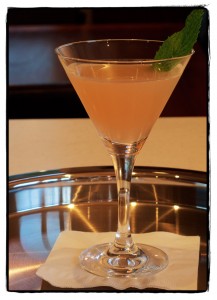

The folks at Understanding Cocktails did it the right way: coming up with a great premise and varying it every which-way until they realized that simplicity was best. In the end they finally have the Flightless Cocktail. Oddly enough, after trying every spirit they could, they realized that it was vodka, of all things, that was best in the Flightless. This is a good example of how vodka can be used a vehicle to showcase other ingredients in a drink.

My thoughts: As they said, this cocktail is very tart. The taste is crisp and clean. The passionfruit and lime provide a great fruitiness that makes you think the drink isn't mostly vodka. The amaretto provides the sweetness and the slightest earthy undertone. I used Gordon's vodka. I also used passionfruit syrup as a substitute.


Felicia's Speakeasy is taking advantage of spring's accost by looking toward her garden for inspiration. An old favorite of hers is the Tomato Zinger, which combines freshly-muddled tomatoes with honey syrup, gin, and lemon juice. I'm not sure how Felicia can act so festive and springy in upstate New York at this cold time of April, but as I've learned as a dude who wears tropical shirts too often, attitude is everything.

My thoughts: I've never had a drink with muddled tomato before. I thought this drink would taste savory, but I was wrong. The tomato sings as the fruit that it truly is. I had some honey syrup lying around from my latest experiments with making mead, and both the syrup and the lemon help this fruity drink chirp like a cheerful bluebird on a beautiful spring morning. Bravo. I used Gordon's gin.


The ever-posting Frederic of Cocktail Virgin Slut has delved into his repertoire for an old drink that he created before he even began blogging. The remarkable part of this is that after almost 1,000 posts later, with his palate inevitably maturing, he still finds his old drink the Frigate Bird to be still as good as it ever was. The drink uses the traditional tiki ingredient Batavia Arrack, an exotic spirit even as tiki ingredients go.

My thoughts: I don't have any arrack, so I used a caney cachaca instead, Cachaca 51... I used homemade grenadine and Trader Tiki falernum. It turned out sweeter than I thought. The Heering and the grenadine combine to make a sort of berry flavor that's very pleasing, with the spiciness of the falernum occasionally coming through. The grassiness of the cachaca played with the tannins in the grenadine that lended almost a savory tomato flavor.


Inspired Imbibing's Adam has long been tinkering with the Calm Seas. Adam says that the soul of the drink was inspired by the Jasmine cocktail. He's used lime juice in this one, and has added a bit of elderflower liqueur for aromatic purposes. He also manages to make a beautiful lime twist, which isn't easy. (I've learned a tip for making lime twists: lime peel is much thinner than most citrus peel and so isn't ideal when trying to cut it off... the solution is when you're at the store trying to find soft limes for juicing, go ahead and also buy the hardest lime you can find... the firm limes tend to have a thick rind which is great for peeling.)

My thoughts: I used Gordon's gin and I didn't have any St. Germain, so I used, believe it or not, Bacardi Solera, which I've always thought had elderflower notes to it. The gin in the drink is the vehicle that delivers the backbone of the Campari and the tartness of the lime, but it's tempered by the orange liqueur's sweetness... and I can taste the elderflower note in there as well! This is a very nice sour that would serve well as an aperitif.
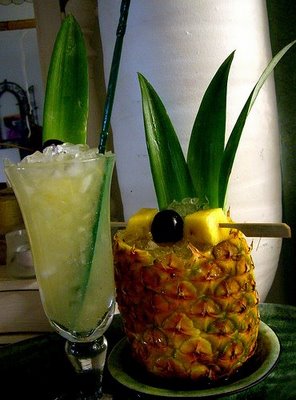


The legendary Tiare atop her Mountain of Crushed Ice serves up the Pineapple Delight, a concoction that goes quite well with the theme of her blog. Her remix uses muddled pineapple, rhum agricole and honey cream mix, which contains just a bit of butter. She also uses Ting, an ingredient with which I have a love/hate relationship, and it's all due to both Tiare and Rick at Kaiser Penguin.

My thoughts: Believe it or not, I actually had a bottle of Ting on hand. I didn't have any rhum agricole, so I used Leblon cachaca. The fresh pineapple in this is really great. Along with the lime juice and honey syrup, the pineapple joins in to create an almost floral flavor. I made the honey mix complete with the butter, and the butter really added an enjoyable element to the drink.


Doug Winship of the Pegu Blog takes a break from his lime juice and Angostura bitters and has graced us with a gin creation of his own. He's not making it easy for me: his Blue Beetle #2 calls for blueberry syrup, which I must make myself. I'll be sure to break out the good gin for this one, Doug.

My thoughts: I'm not a big fan of blueberries, but this drink doesn't really taste like blueberry. The blueberry syrup, gin, and lemon juice combine to form a spicy and floral mix that's somehow greater than the some of its parts. I wish I could convey the gorgeous magenta hue that this drink took on for me. I took pictures, but couldn't do it justice. I broke out my George Bowman gin for this one, Doug. This is a drink I'll make again on my own time.


Good Spirits News has given us a curious concoction called the Scotch Lassie. Not many places do you see Scotch whisky and lime juice paired. Along with those, this drink, which is based off of the Mamie Taylor, uses Domaine de Canton and sparkling wine.

My thoughts: This is a nice, dry, and fizzy. The bite of the scotch along with the ginger give a nice spicy spine that flows through the drink. My tongue keeps expecting lemon here, but the lime contrasts and keeps my taste buds awake. This is quite an easy sipper, not too sweet. I used Bench 5 Scotch and I didn't have any ginger liqueur, so I used half ginger syrup and half Cognac instead.


Dan Chadwick posted his drink at Kindred Cocktails. Not only has Dan come up with best the MxMo moniker ever... a "cocktail nerd smackdown", but his drink's name is also quite formidable: the Arrack Attack. Once again, Batavia Arrack rears its wonky head as it takes the lead in this drink. Dan also uses the Italian oddball Cynar, an artichoke liqueur. Like I asked, Dan said that he's been working on this drink for quite a while, and has given it to several guests, cocktail nerds or not, to a spirited response. Thanks a lot for submitting, Dan.


The ever humorous SeanMike of the Scofflaw's Den throws a loud and obnoxious guffaw at my "post early" advice as he posts in the final hour of Mixology Monday, Eastern Daylight Time. Joke's on you, Sean, because I won't be able to make your drink because of short notice. But curiously, I think I might have actually made the Derek back in 2009 and I remember it being great. Sean made the drink in honor of the great bartender Derek Brown here in DC. This is a light drink that makes you want to drink a ton of them.
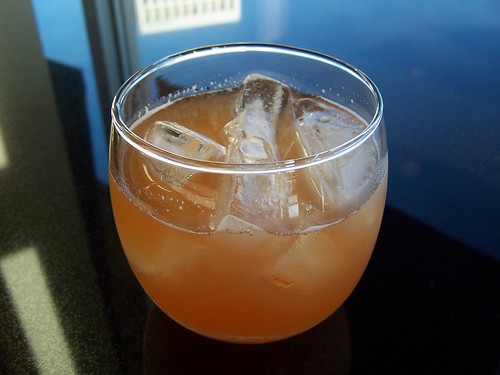


Wow, I did not expect Jacob Grier to ever submit anything to the humble Spirited Remix. Jacob takes a unique tack on how he views his original drinks: "I find that my drinks are like children: Delightful when I first make them, but once they’re a couple years old I’m embarrassed to be seen with them. I mean, uh, I love them all equally and they’re all precious in their own way." Jacob's drink the Lazy Bear was created to honor the marriage of two of his friends at their wedding. The couple is still married and still makes the drink. What's more, the Lazy Bear is now on the menu of a restaurant in Portland. I'd certainly say this drink is a fine candidate for this MxMo.

My thoughts: Holy hell! The Whiskey Barrel bitters and the lime juice are combining to lend an overall bitterness to the drink that's enchanting. The funky rum is perfect for the drink, and the rye whiskey keeps it in check. The honey combats the sourness in the most perfect of ways. I don't mean to gush over the drink too much, but I can see why this is now served in a professional bar/restaurant. I used Sazerac rye and George Bowman rum which, again, I feel closely matches Smith & Cross.
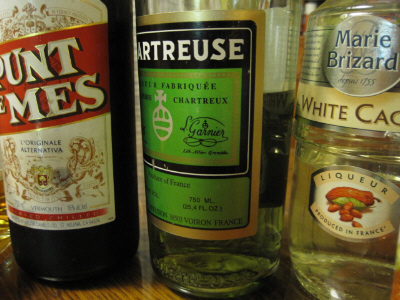


The godfather of Mixology Monday himself, Paul Clarke, has decided to not miss another round. Paul has dug up an old combination of ingredients that he remembers enjoying but never codified them. In honor of his last-minute posting style, his west coast timezone notwithstanding, he's named the drink the 11:59. Paul complains that there aren't enough spirit-forward rum drinks, and by god, I can't disagree. The 11:59 combines aged rum with Punt e Mes, chocolate liqueur, and Chartreuse. Visit his post if you'd like to learn what the great Paul Clarke normally likes to drink in lieu of making his own concoctions.

My thoughts: This drink is really sophisticated. While I didn't have the Angostura rum, I thought my substitute suitably reproduced the vanilla flavor that Paul was going for. My vermouth substitute didn't really work, though... I feel it needs to be more bitter. With that said, I thought the chocolate would be overpowering, but it wasn't. All the ingredients here lie calm to meld with each other. Really effing nice. Instead of Angostura I used a combination of Zaya 12 and Margaritaville dark Jamaican rum (it's actually really good) and instead of Punt e Mes, I used Carpano Antica, Dolin rouge, and a dash of aromatic bitters.


Last up is Marc of A Drinker's Peace. He muses on how most of his creations are variations on the sacrosanct classics, and his house-named drink A Drinker's Peace Cocktail isn't far off from this formula. I find I have a lot in common with Marc. He's very long winded about how he made the drink and which products to not use in it, and then he even offers a secondary recipe for those who wish to make the drink without all the fancy ingredients (for people like me). His drink is flagshipped by aged rum, with a bit of vermouth, apricot brandy, and absinthe to complement. Count me in.

My thoughts: Marc called for an aged rum on the subtle side, so I used a combination of Mount Gay Extra Old and Cruzan rum that I aged myself in my own small barrel. I didn't have a remarkable apricot brandy, and so as he asked, I added it lightly. The result is very warming, and probably sweeter than his, because I used Carpano Antica vermouth. The apricot and the absinthe go really nicely together, and the unobtrusive rum acts as a vehicle for the accenting ingredients as opposed to dominating the drink. Very classy, Marc.


I can't thank everyone enough for participating in this month's MxMo. I think the list we have here is certainly one to take note of. If you see a drink here that looks good, you should probably whip it up and give it a try, because you can rest assured in knowing that it's someone's best.

MxMo: Si Se Peude Ponche

A mixologist named Sam wished to participate in the upcoming Mixology Monday event: Your Best. Sam didn't have a blog, but he submitted to me his post nonetheless. I'm posting his drink here for all to see, as it deserves to stand on its own.


Last fall, a friend was in the process of defending his thesis, which dealt with the social dynamics amongst migrant farm workers in the Northeast United States. His life wasn't very pleasant at that moment, and I wanted to offer something as a way to cheer him up. And what better way to lift a friend's spirits than with, well, spirits?

I decided to make a punch, largely because communal culture was a central theme in my friend's thesis, but also because I really like making punch. I had also just then stumbled upon a recipe for homemade apple cider, which I was determined to involve somehow. Then it struck me that migrant farm workers are largely responsible for picking the apples, and what better way to honor them than to use the fruits of their labor, while also paying homage to their native origins?

Because my friend's field work had mostly involved Mexican workers, I chose ingredients commonly found in that part of the world. For a name I initially settled upon Migrant Farmworker Punch, but decided instead to make things more interesting and call it Si Se Puede Ponche. "Si se puede!" being the rallying cry of Cesar Chavez's California farm worker movement. The punch was a big hit and I have since made it a number of times, tweaking quantities and ingredients along the way.


Si Se Puede Ponche

1 part homemade apple cider (though, a quality store bought variety will suffice)
1 part hibiscus tea (I usually squeeze a few dashes of lemon and ginger juice in here to make a it bit more dynamic)
1.5 parts Reposado Tequila (I've used both the highly affordable Pueblo Viejo and Espolon to great effect)
.25 parts Mezcal (Del Maguey Vida employed here)
.25 parts vanilla syrup (homemade)
2 dashes mole bitters (Bittermen's)

My best,

Sam