Wednesday, September 15, 2010

MxMo: Lime

(This post won't gain me any friends.)


Once again, it's Mixology Monday, and this time around Doug Winship of the Pegu Blog (one of my favorites) is hosting. Doug named his blog after his favorite cocktail, the Pegu Club, an old mainstay that has gin and lime juice, among other things. Accordingly, he has chosen lime as this month's theme. Well, I have brashly decided to use this theme as a flimsy soapbox on which I shall preach and rant. (Winship and the guy, please forgive me.)

You can find the Round-Up for this MxMo here!

Today I'm not talking about lime per se, but rather a product that uses it: Rose's Lime Juice. Rose's Lime Juice is a cordial, which essentially means that it's a sweet fruit-flavored liquid that's meant to be diluted with something. In this case, Rose's Lime Juice is really only used in one popular alcoholic drink: the Gimlet cocktail (A simple combination of Rose's and gin).

Rose's Lime Juice is a controversial product, which I'll address in a second. The stuff is old; it was originally created to prevent scurvy in the British Royal Navy. The recipe has basically been left unchanged over the years (although the modern American version of it uses high fructose corn syrup instead of sugar... this sounds like it would taste worse, but strangely, I came across some British Rose's made with sugar a few years ago, and the stuff was so overwhelmingly sweet that it was essentially unusable in a Gimlet). Its taste is somewhere between a natural lime flavor and those green lolipops you were given as a child. Some say that the sweetness is cloying, that the flavor is of chemicals, and that it's an overall inferior product.

Many people have maligned the Gimlet over the years because of this distaste for Rose's Lime Juice. I'm not going to point fingers, but a simple web search for Gimlet (blog) articles can reveal this opinion. As a result, many people choose to forego the cordial and substitute lime juice and sugar syrup. And that's fine. But please, if you do, don't call it a Gimlet; it may taste delicious, but it doesn't taste like a Gimlet should. Some people (and bartenders), however, choose to make the drink without Rose's and give it the same name, in an attempt to expunge the cordial from modern mixology. Regardless of your politics, THAT is what's called "rewriting history".

There are a few sources which I consider authorities on cocktail recipes, and the Internet Cocktail Database, Robert Hess, and even the Savoy Cocktail book and David Wondrich all call for Rose's in the Gimlet recipe. Hell, even the Mixoloseum, run by a group which consists of some of the most prolific booze bloggers, including Doug Winship himself, calls for Rose's.

This brings to mind a blog post by Matt Hamlin, a blogger here in DC who I've personally met. (Great guy!) Here, he details how good a Gimlet can be with another brand of lime cordial called Employees Only. Matt remarks how "sticklers" insist that a cocktail without Rose's can't be a Gimlet, but also remarks how his taste for Rose's has waned, having liked it previously. As I type this, there is only one comment to Matt's blog post, but it's a poignant one. Arctic Wolf's final sentence in his comment reads: "if I have been making my Gimlets wrong [with lime juice and simple syrup] for all these years…can I really call them Gimlets?"

Recently there have been controversies concerning both the legality and appropriateness of building certain cocktails using only a specific brand of spirit, but the Gimlet's case is not quite the same. (Incidentally, Doug Winship has touched upon that subject here and here.) This isn't really an issue of promoting a specific brand in a recipe that would otherwise be perfectly comparable with substitutes. This is much more akin to the tiki "sticklers" who insist that the elusive (and presently discontinued) Lemon Hart 151 rum can not be substituted without keeping the spirit/character of any recipe that uses it. The same is true here with Rose's. I'll admit, however, that the game changes quite a bit in cases of discontinuation, like Lemon Hart. The recurring problem of discontinuation is a scourge that's touched every corner of the cocktail world and its history. Ultimately, this rant is to preserve history and tradition.

Bottom line: Rose's Lime Juice is an old and unique ingredient on which the Gimlet is based. Its long-standing tradition and singularity are such that if you substitute it for something else in a Gimlet, it's not a Gimlet. Your distaste for Rose's Lime Juice does not give you the right to change the Gimlet. If you make a drink with fresh lime juice, sugar, and gin, please give it a different name... it could be something as simple as the Fresh Gimlet, Natural Gimlet, or even something cheeky like the Improved Gimlet or The One and Only Gimlet. But if your drink does not have Rose's, your drink is not a Gimlet.


Gimlet (on the rocks)*

2 oz gin
.75 oz Rose's Lime Juice*

Combine ingredients in a glass and stir vigorously with ice. Serve.


*I prefer a Gimlet on the rocks. The Gimlet is not a drink that suffers from dilution.
**The key to enjoying a Gimlet is knowing how much Rose's Lime Juice that you prefer. Recipes vary this amount, but if it's undrinkable for you, then what's the point? Even a dash of Rose's in a glass of gin is closer to the spirit of the Gimlet than fresh lime juice. Find an amount that suits your tastes

Friday, September 3, 2010

Weird is not Bad

There is a man named Phronk, and he runs a blog that documents his experiences with putting weird things in coffee. More accurately, he mixes weird things in coffee, dunks weird things in coffee, and even brews weird things with coffee grounds, all because he loves coffee so much that he tests the bounds of coffee's deliciousness beyond society's arbitrarily established conventions. Some of my favorite posts of his are coffee with Hollandaise and curry.

Well, Phronk has finally put on his mixologic hat, and has decided to create the Mojijoe: a mojito with hot coffee instead of seltzer! The verdict? Find out for yourself right here.

Note: Phronk is a snobby Canadian who chooses to flaunt his Cuban Havana Club rum in my rum-loving American face. I performed a persuasive speech in high school over the futility of the Cuban Embargo... I just didn't realize it was for a reason that I would find much more engaging 10 years later!


Wednesday, August 25, 2010

MxMo: Brown, Bitter, and Stirred

This month's Mixology Monday event is themed after the blog hosting it: brown, bitter, and stirred.


As it just so happens, I have a recipe that I've been working on for quite a while that perfectly fits this theme. I've been waiting to post it, and so now seems like a great time.

As much as I'd love to be long-winded about this thing, there's really not much to say about it. You can really think of it as an elaborated Manhattan cocktail: you have two ounces of bourbon, you have dry vermouth and cherry brandy to replace the Manhattan's sweet vermouth, and you have Fernet Branca to replace the Manhattan's aromatic bitters. The final result tastes very much like a Manhattan, but just a bit more complex, herbal, and bitter.

Fernet Branca is a bitter liqueur from Italy called an amaro(amari, plural), one of many. It's made from a multitude of ingredients, and it's not for the faint of heart. For example, it's a go-to armament of mine when I win bets with friends, where the consequences involve shot-taking. Not only is Fernet Branca considered an amaro, it's also considered a potable bitters, meaning that it can serve as a digestif but also play the role of bitters in a cocktail. Campari is also in this category. A favorite anecdote of mine is that Fernet Branca can stain linoleum(it's as black as ink), and whoever said this isn't wrong; my last apartment has Fernet stains at various places on the kitchen counter.

Here is the MxMo roundup!


If you like this blog, please, PLEASE, try this drink (if you're able to make it) and post your comments below. I'm quite proud of this drink, and I'd love to know if anyone has opinions on it.


ORIGINAL REMIX


Old Knoxville

2 oz bourbon
.5 oz dry vermouth
.25 oz cherry brandy*
.25 oz Fernet Branca

Stir ingredients with ice, strain into cocktail glass. Garnish with maraschino cherry.

*Cherry Heering liqueur is the best choice here, but I prefer Hiram Walker's cherry brandy. If you use something other than Heering, double the amount. No, a clear cherry spirit/liqueur is not appropriate for this recipe.

Tuesday, July 20, 2010

Cocktails & Ego

It's not a foreign practice for cocktail fans to simply make up a drink as they go. Maybe we feel like having a whiskey drink and don't know which, or maybe we have a few bottles with just a bit left in them that we want to get rid of; it's quite common for us to just get a few ingredients, throw them together, and see what happens. Sometimes the results are quite nice, and recipes are honed to result in a great original drink.

Well, a few years ago this happened to me. I wanted a gin and vermouth drink and I only had sweet vermouth, so I cooked up a quick ditty. Gin, sweet vermouth for its sweetness and herbal character, a dash of Angostura bitters for spice, and I peeled a bit of orange over the top of the drink for a bright fruity punctuation. I did this in my preferred proportions for a Martini or Manhattan. I didn't have a name for it, but it ended up looking like this:

2 oz London dry gin
.5 oz sweet vermouth
1 dash aromatic bitters

Stir together with ice, strain into cocktail glass. Garnish with an orange twist.

It was delicious, and I found myself making these all the time in the following months and years. What seemed eerie to me, however, was that such a simple drink with such common ingredients with such a classic recipe structure hadn't already been invented. One could even simply call it a sweet Martini or a gin Manhattan, by a stretch. Well, I took to the Mixoloseum Bar chatroom one night to ask the experts if there were such a drink that existed.

The best answer I got is that it was a variation on the Martinez cocktail. The Martinez is much like the recipe above, except that it uses orange bitters instead of the aromatic, a lemon twist instead of orange, and sometimes adds a dash or two of Maraschino liqueur. (The Martinez is a very old drink, and recipes that you'll find vary widely)

But then I came across the Hearst cocktail, and old favorite of David Wondrich, one of the cocktail demi-gods that we should all worship and adore. The Hearst varies from my above recipe by adding just a bit more sweet vermouth as well as the addition of orange bitters along with the aromatic.

Then I found myself readdressing the online cocktail list of Robert Hess, the single figure who pulled my tastes away from tiki and toward classic cocktails. His page documents the vintage Martini recipe from around 1900, when dry vermouth was not so much en vogue. This recipe is essentially a Martinez without the Maraschino!

And then comes along Erik from the Underhill-Lounge who is known for mixing and reviewing every single cocktail in the great Savoy Cocktail Book in alphabetical order. He's already at the S's, and recently mixed the Sunshine cocktail, which differs from my above recipe only by the proportions of gin and vermouth! (I've been known to make fun of the Savoy as an entire book of Martini variations)

This is getting ridiculous, I said to myself. I looked harder and found that even more folks had the same bright idea that I did...

Cocktails similar to mine above, and how they differ (using a generalized recipe):

Martinez
More sweet vermouth, lemon twist instead of orange, additional orange bitters
vintage 1900 Martini
More sweet vermouth, lemon twist instead of orange, orange bitters instead of aromatic
classic Martini
More gin, sweet vermouth instead of dry, lemon twist and aromatic bitters instead of the orange counterparts
Hearst
More sweet vermouth, additional orange bitters
Sunshine
More sweet vermouth, less gin
Artillery
More sweet vermouth, less gin, lemon twist instead of orange, optional Boker's bitters
two variations of the Yale
Less gin, additional orange bitters, additional Maraschino
Rex
Less gin, more sweet vermouth, orange bitters instead of aromatic, and no twist
Barry
Less gin, more sweet vermouth, lemon twist instead of orange, additional creme de menthe

I could go on. If I considered all cocktails with this basic structure and additional dashes of other ingredients, the list would continue to grow. And aside from the addition of strong ingredients like aromatic bitters and maraschino, these drinks are mostly going to taste the same, if not very similar.

Why create a new name for each one, then? I dunno... ego? Probably not. As you can see, I, your lowly DJ, effectively created this recipe from common sense and minimal creativity all by myself, and so it goes to show how the same thing probably happened to bartenders and mixologists during the past 100 years.

Yet I have the power of the internet. I have databases at my disposal. I see the universality of the recipe I created. I know that others more creative, more talented, and smarter than I have already crafted such masterpieces, and so I shall let my modest persona lay prostrate as these mixologic giants tower above me. My voice need not join this already harmonious symphony. I sit only as a learned spectator, appreciating the craft as someone who occasionally and humbly partakes.

So what am I calling my drink? Nothing. It deserves no name, and certainly isn't qualified to be an "original remix". It's simply a variation on any of the recipes you see listed above. More important than any name is that you make it for yourself, or any others listed on this page, and enjoy.

Cheers.

Wednesday, June 30, 2010

Just how much booze do I really have?

I recently moved across town, and this gave me the opportunity to view my liquor collection in its rarely-seen upright form. I was amused and took a few photographs, and I thought to share just a few here.


Mind you, this is by no means a large liquor collection. I probably have over 50 bottles, but for example, I've seen SeanMike's collection in person, and it's at least three times the size of mine. Even with my collection, I would say that I'm only able to make any given cocktail recipe about 25% of the time.


So no, this is not some narcissistic flaunting, but instead reflective musing. I always enjoy seeing pictures of others' collections and what comprises them, and so I figured some of you may also feel the same.

There's no way in heck that I'll attempt to list my liquor inventory, because my bottle turnover rate is embarrassingly quick. **hiccup** My stock is dynamic.


Once I moved in, however, I returned the booze to its horizontal state on its wine rack.


I keep my aged rums and other wonky bottles on the top of my shelves here. If you look closely you can spot my Pyrat Cask 1623, the prize of my collection.


Tuesday, June 8, 2010

Recipe & Rating: Mint Muse


Mint Muse


Source: small tag on Lucid bottle

1.5 oz Lucid absinthe (used Lucid)
2 oz pineapple juice (used Dole)
top with Sprite/7-Up (used Canada Dry Bitter Lemon, about 2 oz)
6-8 mint leaves
2 wedges lime


Muddle 1 wedge of lime and mint leaves in a tumbler glass. Add the soda, juice, and absinthe, then stir. Fill with ice, and add last wedge of lime as a garnish.


I bought Lucid because I was told it underplays the anise tones more than other absinthes on the market. Lucid was the first absinthe that one could buy legally since it was outlawed in 1912, but as such, I hear that its flavor profile is a bit subdued specifically for the American market. I hate lack of authenticity, but I hate overpowering anise even more, so I'm fine with this purchase (so far). This drink is about what you'd expect from a product's official literature. The absinthe thoroughly trounces both the pineapple and the bitter lemon (which is hard to do). I chose to use bitter lemon instead of lemon-lime soda because it's a more sophisticated product, frankly. Overall the drink isn't bad... the flavors do actually combine into something unique. The tanginess from the pineapple is there, but the absinthe bullies it around. The mint adds an herbal undertone that doesn't necessarily taste like mint. The bitter lemon provides a nice sharp base... I'm not sure how this drink could be made with something so syrupy and bland as lemon-lime soda. After the swallow, the absinthe refuses to let you forget about it.


Rating: 6/10

Friday, May 28, 2010

The DJ Drinks Disney


It should be telling, if anything, that as an arguably grown man I choose to take my hard-earned and precious vacation time off from work to go to Walt Disney World. The place Where Dreams Come True© isn't really known for its drinking culture, but people like Doug Winship, for example, have done a surprisingly good job of rounding up a few good places to start.

To me, drinking at Disney is an exercise in discerning what defines a good place to drink. Should you always expect craft cocktails? Not really, but innovative bartending isn't the only thing that makes a pleasant experience; for me, atmosphere is also a big component. For example, I don't care how good a certain bar's cocktails are if it's generally populated by frat boys or is too loud to hear yourself think.

Well, while Disney World can't always deliver on value for money, it almost always delivers on atmosphere. I'm no bar reviewer, but I will share a few positive experiences that I do recommend, should you choose to embrace your inner child so stubbornly and ceaselessly as I.


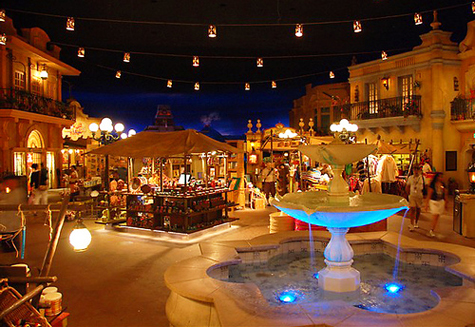
I've loved geography ever since I was a child, eventually getting a degree in it when the time came to graduate from college. And so, Epcot is easily my favorite Disney World park. In Epcot's World Showcase, particularly in the country of Mexico is what's called the Mexican Pavilion. On the outside, it appears to be an enormous Mesoamerican temple. Inside it you will find one of the greatest spaces in all of Disney World. Its interior is designed to look like a lively Mexican market at night. You enter to the sound of festive Mexican folk music with guitars and trumpets. It's very dark, but the center is lit with a warm orange glow. To each side are what appear to be store fronts, and there are kiosks in the center. Toward the rear of the large room is a pyramid with a beautiful mural on the back wall of a lush tropical forest with a lazily smoking volcano in the distance. The mural is lighted and parts of it are animated by effects.


Toward the back near the temple is a lagoon, which happens to be the last leg of the pavilion's attraction, Gran Fiesta Tour Starring the Three Caballeros. On a lower level next to the lagoon is the main dining area of the restaurant San Angel Inn. For years I've always wanted to dine there, and so I finally did this time around.


The drinks at the San Angel Inn were not bad. I and my lovely lady ordered two Margarita variations. (I later also took advantage of getting a bit of the Mezcal they had on the menu.) I got the Blood Orange Margarita, and she, the Pineapple version. (While I don't expect to get a Classic Margarita basically anywhere, I do welcome a "modern" one occasionally when it looks like it's made with good ingredients.) Both of them were good, not great, much like the food. But the atmosphere of the place is what would have me return; you dine in relative darkness, your faces lit by a small lantern on your table... all with the gentle music of marimbas in the background mixed in with the sounds of the erupting "volcano" in the distance... these combined with the pavilion's indescribable pleasant "water ride smell" makes this an experience I would recommend to anyone.


Another place at Epcot worth stopping by is the Coral Reef Restaurant, tucked in a corner of the park next to the Finding Nemo ride. The restaurant consists of a large dining room, one wall of which is the glass of the enormous aquarium that is part of the adjacent ride. The dining room is dark, and most of the light in the room comes from the fish tank. We were able to get a table right next to the glass.


I ordered one of the few drinks on the pan-Disney drink menu (which is surprisingly large) that looked decent called the Eco-tini. I know, the name doesn't really scream "quality", but it had what looked like to be decent and natural ingredients. It uses an Acai spirit called VeeV, lemon juice, ginger, and agave nectar. Sounds good, right? Well it wasn't. It was way too tangy, the kind that hurts your cheeks. I ordered a shot of vodka and added it to the drink, and it still was overpowering. (The drink came with a cute bracelet made of dried acai berries though...)


What the lady got, however, was much better. She got the Magical Star cocktail, which is one of the signature Disney drinks. Is it a balanced cocktail that is complex, interesting, and shows off the best traits of whatever high quality spirits were used to make it? Not really. But is it delicious? Yes. So delicious that I ordered one later at another Disney drinking establishment. It's served on the rocks, and has pineapple juice, Parrot Bay coconut, and X-Rated liqueur, garnished with a pineapple crown leaf. It sounds like a complete disaster, but it's actually interesting and delicious. What's more, the drink comes with a campy LED "ice cube" that sits in your drink and glows different colors. You can turn the cube off at will and take it home with you for use in your own bar. For the effect to really shine, however, you need to use it in a drink that's semi-opaque, so that the whole damn thing glows.


Finally, an honorable mention is the bar at Citricos, a classy joint located in the Grand Floridian Disney Resort. The bartender was friendly, their spirit selection was better than most bars I saw at Disney(including 2 different premium Grand Marnier vintages), and they have adorable little lamps bolted right onto the bar surface. I can't speak to the cocktail service, as we just got dessert wines (their wine selection is very impressive). Go there if you want to feel classy.


If you're a blogger and you have Disney drinking experiences, please post about them. If you're not a blogger, post about them in the comments below! :)